The air over Lower Manhattan on September 11, 2001, was a crystalline blue, a deceptively serene canvas for the worst act of terrorism ever committed on American soil. For Sal Cassano, then an Assistant Chief of Operations for the FDNY, that pristine sky was the first clue that the unfolding catastrophe was no accident. As the 25th anniversary of the attacks approaches, Cassano, now retired, carries the weight of that day with a clarity that time has not dulled, recounting in vivid detail the orders he gave, the colleagues he lost, and the harrowing moments he survived the collapse of the North Tower.
In an exclusive and deeply personal interview, Cassano, who would go on to become the department’s Chief of Operations and lead its monumental rebuilding effort, reflected on a career defined by duty, a brother’s influence, and a resilience forged in the ashes of ground zero. His story is not just a chronicle of survival; it is a testament to the unwavering commitment of the 343 firefighters who made the ultimate sacrifice and the generation of new recruits who joined the department in their wake, inspired by their heroism. “As we come upon the 25th anniversary, I would hope that people would remember the sacrifices that were made 25 years ago,” Cassano said, his voice heavy with the memory of that morning.
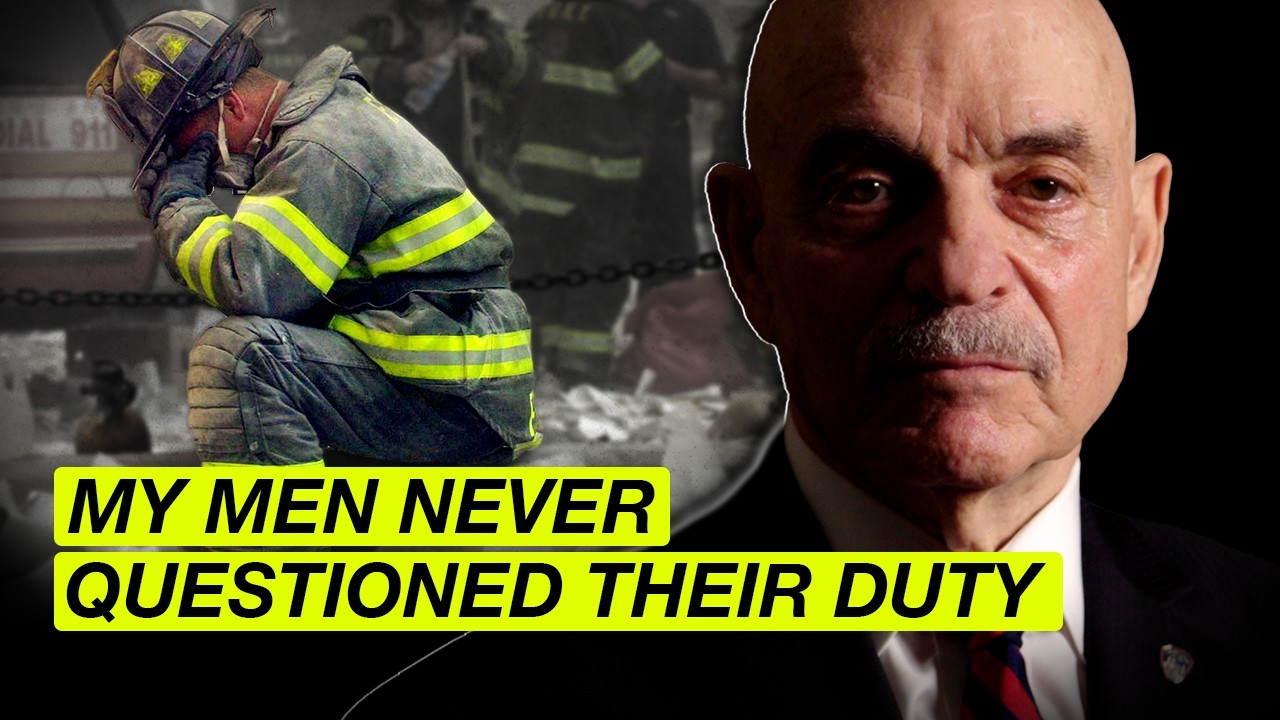 He continued, “I gave orders to people that never came home. They never questioned their duty. They never questioned their responsibility to go up to those buildings, try to rescue as many people as they could, not knowing any of them.
And we should never forget and should be grateful that we had people like that.” The sentiment underscores a philosophy that guided Cassano from his earliest days in the department to the highest ranks of command, a philosophy rooted in the example set by his older brother, a man who not only inspired his career but also shaped his understanding of what it meant to be a New York City firefighter.
Born in Brooklyn in 1945 to Italian immigrant parents, Cassano’s path to the FDNY was paved by familial influence and a sense of duty honed in the crucible of military service. While serving in Vietnam, he received a letter from his brother, a firefighter who had joined the department in 1962, that would alter the trajectory of his life. “He sent me a nice letter and said, ‘I’m going to fill the application for you.
You should be a firefighter,'” Cassano recalled. “He really was my impetus for becoming a firefighter. He was my mentor.
He was a great role model.” The discipline instilled by the army, he noted, provided the perfect foundation for the semi-military structure of the fire department, and with his brother’s guidance on physical preparation, he was appointed to the FDNY in 1969.
For years, Cassano was known as “Patty’s brother,” a reference to his brother’s popularity and respected position as a captain. It was a joke they shared, a lighthearted bond that would later reverse when Cassano’s own career ascended to the rank of commissioner. “He was very proud.
Like I said, if it wasn’t for him, I wouldn’t have been where I was at all,” Cassano said, acknowledging the profound impact of his sibling’s mentorship. That familial foundation of service would carry him through decades of responding to fires across the city, including difficult calls that tested his resolve long before the towers fell. He recalled one particularly painful incident as a chief, investigating a fire where a firefighter he knew personally had been lost in a basement, a day that underscored the inherent dangers of the job and the constant need for improved training and vigilance.
The morning of September 11, 2001, began as a routine administrative day for Cassano. He arrived at headquarters before 8 a. m.
and was in the command center briefing the Chief of Department, Pete Ganci, and Chief of Operations, Dan Nigro, on the progress of a radio project. The conversation was interrupted by a chilling report over the department radio: an explosion at the World Trade Center. Initially, the assumption was an industrial accident, but that theory was quickly shattered when Chief Joe Feifer, the first chief on the scene, reported that a plane had crashed into the North Tower.
“We said, ‘Wow, now this is something different,'” Cassano remembered, still thinking it might have been a small plane that had gone off course.
But as Cassano ran into an office with a view across the river, the sight of a massive plume of smoke pouring from the iconic tower erased any doubt. “I says, ‘Mike, this is not a small plane and it’s not an accident. Look at that.
 I mean, I could see from Brooklyn into Manhattan. Beautiful blue sky, clear day. There’s no way in the world a plane could have gotten disoriented and hit that building without it being done purposely,'” he recounted, recalling his words to a battalion chief.
His instinct was immediate and correct. As he responded to the scene, crossing the bridge with a few members of his staff, he heard another explosion, initially believing it was a secondary blast within the North Tower. Looking up, he realized with a jolt that it was the moment the second plane struck the South Tower.
He sought refuge in an open garage until the debris cleared, then made his way to the front of the North Tower, where the command post was being established.
The scene at the command post on West Street was one of organized chaos amidst unimaginable horror. Cassano immediately recognized the danger of their position, with debris raining down and people jumping from the upper floors. He ordered the command post moved closer to the World Financial Center, identifying a garage that could serve as a refuge.
Chief Ganci arrived and took command, a leader Cassano described as “an unbelievable leader… somebody that we all looked up to.” The plan was to manage the rescue operation, get civilians out, and coordinate the fire companies working inside the towers.
The possibility of a full collapse, Cassano admitted, never crossed his mind. “We were always told that those buildings would withstand a plane crash. That was their mantra of how safe these buildings were,” he explained.
“Well, it did withstand two plane crashes. Unfortunately, the fires that took place after the plane crashes with all that diesel fuel burning for a while, that’s what took those buildings down.”
The first sign that their world was about to change came with the collapse of the South Tower. Cassano and the other chiefs in the command post made a desperate dash into the garage they had identified as a refuge, waiting for the suffocating dust and smoke to clear. When they emerged, the scene was surreal, a landscape transformed into a gray, ash-covered moonscape.
The focus shifted instantly to rescue and evacuation. Chief Ganci ordered Cassano to move the command post north and evacuate the North Tower, recognizing that it too was likely to collapse. “He says, ‘Get me as many companies as we can, tell them to meet me at the south tower.
I’m sure we have people trapped. I know we have people trapped. We have to rescue as many people as we could,'” Cassano recalled, describing Ganci’s determination.
 “And they says, ‘Move the command post north and have them evacuate the north tower at the same time to get our people out of there.'”
Cassano gave the orders, moving the command post and initiating the evacuation of the North Tower, then began walking south to rejoin Ganci at the South Tower rescue operation. It was then that he heard a sound he initially mistook for another plane. “I looked up and then all I did was see the antenna of the North Tower imploding.
I mean, just coming straight down,” he said. Realizing he was directly in the collapse zone, he started to run. The debris and dust began to rain down, and he dove under an apparatus truck parked at the corner of West and Vesey Streets.
The force of the collapse was immense, and he was struck by debris, sustaining bruised ribs. In the aftermath, two EMTs found him with a stretcher, but even in his dazed state, his training kicked in. “I told them, ‘Wait, I have to find my helmet.’
And they thought I was crazy,” he said with a faint, rueful smile. “But in the fire service, you’re taught if you find a helmet, somebody belongs to that helmet. And I didn’t want anybody looking for me thinking I was missing.”
After being escorted to a triage area and then transported to St. Vincent’s Hospital, Cassano was treated for his injuries. The scene at the hospital was a haunting preview of the day’s toll.
“When they backed us up into that area where you would unload an ambulance, there was so many doctors, so many nurses waiting for people to come. Unfortunately, nobody was coming. It was either you made it or you didn’t,” he said, the memory still stark.
He was one of the first to be treated, and as soon as he could, he left the hospital, had someone pick him up, and returned to headquarters to coordinate the response. For the next day and a half, he worked the phones, fielding frantic calls from family members searching for their loved ones. The initial count was staggering: 505 members of the FDNY were missing.
He finally made it home on the night of September 12th, driving a car with a broken windshield, covered in dust, to find his five children waiting for him on the steps. The relief of their presence was immense, but the work was far from over. Within days, the department’s official death toll was confirmed at 343.
Cassano, who was formally promoted to Chief of Operations on September 16th, took on the monumental task of leading the department through its darkest hour and into the long, arduous recovery and rebuilding phase. He established a dual-operations structure, one for the World Trade Center site and one for the rest of the city, ensuring that New Yorkers were still protected while the massive recovery effort at ground zero continued. Every night, he made a point to walk the entire site, visiting the firehouses and the members working in the rubble, offering a reassuring presence.
 “I wanted to make sure that they knew that the chiefs were there with them. You’re not alone. We’re going to make sure that you’re okay,” he said.
The visit from President George W. Bush days after the attack provided a crucial morale boost. “It was a lift that he gave us that we needed at that time,” Cassano said, recalling the President’s bullhorn speech and his embrace of retired firefighter Bobby Beckwith.
“He told me, ‘We’re going to take care of business for you.’ For us, that meant get the people that did this. And he did.
And that kept us going until we left that site.” The rebuilding of the FDNY was a herculean effort, requiring a complete overhaul of training, equipment, and mindset. Cassano leaned on a dedicated team of senior officers who worked extraordinary hours to rebuild the department, incorporating lessons learned from 9/11 into every aspect of training, from terrorism awareness to building construction and hazmat response.
Perhaps the most inspiring chapter of the recovery was the surge of new recruits. The department feared that the horrors of 9/11 would deter potential candidates, but the opposite proved true. “We were blown out of the water.
There were 60,000 kids that signed up,” Cassano said, his pride evident. “We had the cream of the crop… the kids that came on originally are running the department today.
25 years later, that’s our chiefs, our captains, our lieutenants.” This new generation, motivated by the sacrifice of the fallen, has ensured that the FDNY is stronger, better trained, and better prepared than ever before. “I’m proud that I was able to help the department rebuild from our darkest hour to where when I left we were better equipped, better trained, better prepared than ever before to handle an event if it happens again,” he stated.
As the 25th anniversary of the September 11th attacks approaches, Cassano’s message to the nation is one of remembrance and gratitude. He speaks not only of the 343 firefighters, but of the families who have lived with the void of their loss for a quarter of a century. “There’s many families that never had their loved ones at a birth, a communion, a bar mitzvah, a graduation,” he said.
“People 25 years should remember the sacrifices that the members made and their families are still making today because they’re not with their loved one.” His own survival, he acknowledges, was a matter of timing and fate, a reality he lives with every day. The orders he gave that morning were carried out without question by men and women who ran into the burning towers as others fled.
Their bravery, he insists, is the legacy of the FDNY, a legacy he helped to preserve and strengthen. “And they should never forget and should be grateful that we had people like that 25 years ago and still in the department today what they’ve done,” he concluded, his final words a solemn tribute to the fallen and a call to honor their memory by remembering the true cost of that September morning.


