The search for the first homosexual human being is fundamentally impossible, not because such a person never existed, but because desire does not fossilize. Skeletal remains can reveal age, injuries, diet, ancestry, and migration patterns, but no gene, bone, or burial position can ever disclose whom a person wanted to kiss. This silence creates a profound challenge for understanding sexuality in deep prehistory, even though same-sex attraction appears in every modern region and same-sex behavior is documented across the animal kingdom, including among our closest primate relatives. Written civilizations described same-sex relationships thousands of years ago, yet the prehistoric record remains almost silent on the matter.

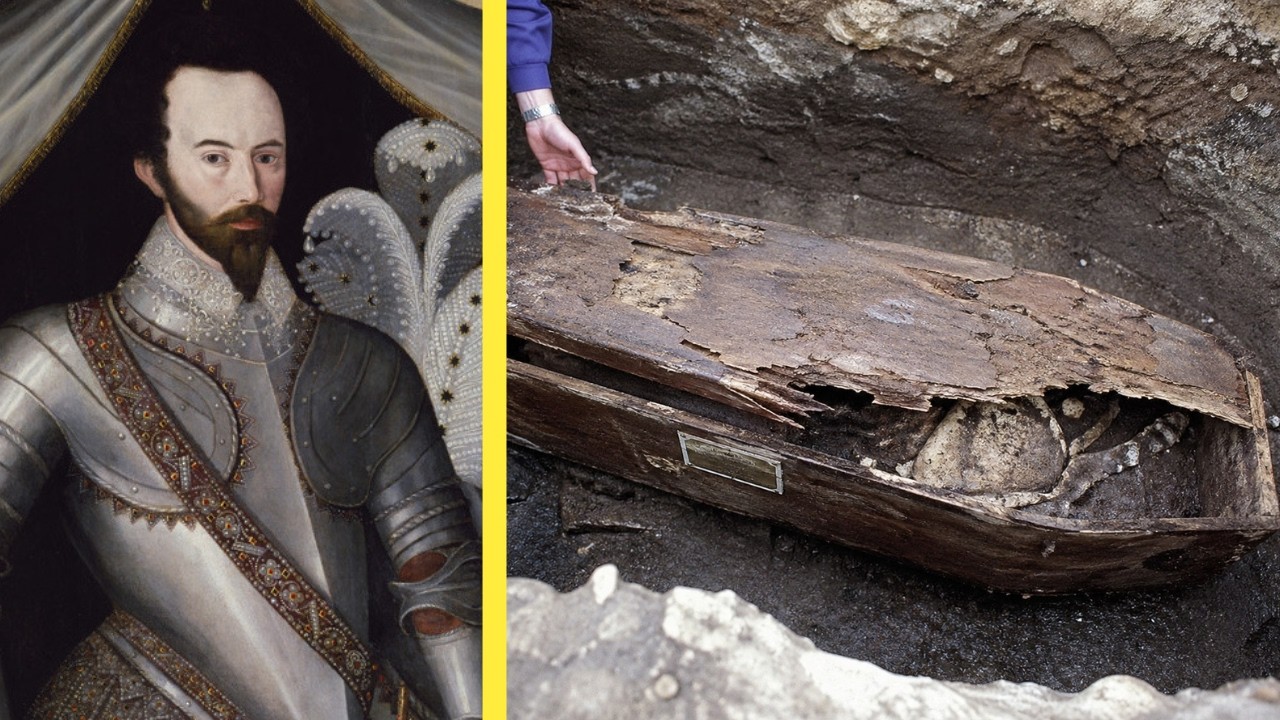
While ancient humans almost certainly experienced same-sex desire, proving exactly who was homosexual, how they understood themselves, and what their communities thought about them is far more complicated than declaring that two men buried together were prehistoric boyfriends. In 2011, headlines announced the discovery of a “gay caveman” near Prague. The roughly 5,000-year-old burial contained a skeleton initially identified as male, but the body had been placed on its left side with its head facing east, a position more commonly associated with female burials in that Copper Age culture. Male burials typically lay on the right side facing west, and the grave lacked several objects commonly found with men.
The media quickly concluded the case, but the archaeologist had only suggested the burial might represent someone with a different social gender or unusual ritual identity. Skeletal sex estimates can be uncertain, and burial customs are patterns, not laws. A differently positioned body could have been a ritual specialist, an outsider, someone buried during an emergency, or evidence that real communities did not follow customs with the consistency of an instruction manual. None of these possibilities establishes sexual orientation, as gender expression and sexual attraction are related but not identical.
Archaeology can provide context rather than definitive answers. A hunter-gatherer community 40,000 years ago would have consisted of perhaps 30 people traveling together, sharing food, raising children, and knowing one another with exhausting intimacy. Sexual behavior would not exist in a private universe separate from daily life, as partnerships affected child care, food sharing, alliances, jealousy, and reproduction. While most adults probably formed opposite-sex relationships because children were essential, “most” has never meant “all.
” There is no credible reason to imagine that the biological processes producing same-sex attraction switched on only when humans invented writing. The deeper human lineage makes this conclusion even more likely. Same-sex sexual behavior has been documented in hundreds of mammal species, with a 2023 comparative study reporting observations across 261 mammal species and finding it especially common among primates, with records from at least 51 primate species. This does not mean every animal engaging in same-sex behavior possesses a human-style gay identity, but the animal evidence destroys the idea that same-sex behavior required modern cities, decadent philosophy, or social media.
Evolution was experimenting with social sexuality long before humans invented taxes. The preservation problem is central. Archaeologists find what survives: stone tools, hearths, and occasionally bones. A private relationship leaves evidence only if it changes material culture in a way researchers can identify.
Two women sharing a shelter would not leave behind a chemical signature labeled “romantic. ” Two men caring for one another might look exactly like brothers, hunting partners, or friends. Even burial together proves little, as people are buried beside relatives, spouses, servants, enemies, and strangers who died in the same disaster. Prehistoric art appears more promising but is notoriously difficult to read.
Rock paintings sometimes show human figures with exaggerated genitals or touching bodies, and a few have been described as depicting same-sex acts. Yet a shape identified as a penis may be a tail, weapon, costume, or later scratch. The sex of stylized figures can be uncertain, and a scene may depict ritual, violence, mythology, humor, or an event no modern category captures. Correcting past biases that interpreted everything through a heterosexual imagination is necessary, but replacing that bias with equal confidence in the opposite direction is not.
When writing arrives, the picture changes. Ancient Mesopotamian cuneiform texts contain references to same-sex acts, gender non-conforming religious personnel, erotic desire, and omens involving sex between men. Some texts treat a male same-sex encounter as an ordinary event with ritual consequences, while certain incantations ask for a man to gain the desire of another man. Literature associated with the goddess Inana or Ishtar includes people whose gendered presentation did not fit ordinary roles.
Legal and omen traditions could distinguish between active and receptive partners or treat an act differently depending on status and circumstance. What the tablets prove is not universal acceptance but recognition. Scribes could write about one man desiring another because the possibility made sense to their readers. Around 2400 B.
C. E. , two royal manicurists named Nyankhnum and Khnumhotep were buried together at Saqqara. Their shared tomb shows them embracing, holding hands, and touching noses, an Egyptian gesture often compared with kissing.
In the most intimate image, the two men stand face to face in a pose commonly used for married couples. Modern viewers have called them history’s first recorded gay couple, possibly. They may also have been brothers, perhaps even twins. Their similar names can be translated as a phrase resembling “joined in life, joined in death.
” Both men had families, which does not disprove a relationship between them, as bisexuality existed and marriage in Egypt carried economic and reproductive duties. The tomb gives us intimacy without a confession. Egyptian mythology contains another revealing case. In one story, the god Seth attempts to sexually dominate his nephew Horus during their struggle for kingship.
The encounter is not presented as a loving same-sex relationship but concerns humiliation, power, and semen, with a remarkably elaborate counterattack involving lettuce. The story shows that Egyptians could imagine sex between males, but the meaning depended on who penetrated whom and what the act did to masculine status. Ancient Greece is often described as accepting homosexuality, a statement that is both partly true and deeply misleading. Several Greek societies openly recognized erotic relationships between males.
Athenian pottery depicts courtship and intimacy between older men and younger males, poetry celebrates male beauty, and Plato built philosophical arguments around love between men. The Sacred Band of Thebes was an elite unit traditionally described as pairs of male lovers who would fight more fiercely beside one another. However, Greek sexual rules focused heavily on age, citizenship, masculinity, and social role. In the best-documented Athenian system, an adult male citizen could court an adolescent male, with the older partner expected to be the pursuer and dominant participant.
This was pederasty, and it cannot be discussed honestly without acknowledging the age and power imbalance. Some relationships may have involved affection and mentorship, while others involved pressure, exploitation, or slavery. The central question was often not the sex of a man’s partner but whether he behaved in a role appropriate to his age and rank. Women appear less clearly in the record because men produced and preserved most surviving texts.
Around 600 B. C. E. , Sappho of Lesbos wrote lyric poetry describing desire, beauty, and emotional intensity directed toward women.
Only fragments of her work survive, partly because ancient literature has an excellent sense of irony: the woman whose island eventually gave English the word “lesbian” survives largely in pieces. Her poems do not provide a modern identity statement, and scholars debate the performance settings of individual fragments, but attempts to explain every expression of female desire as purely ceremonial require their own athletic level of denial. Rome inherited Greek traditions and converted them into an even more explicit system of power. For a freeborn Roman man, masculinity depended less on whether his partner was male or female than on whether he remained dominant.
Sex with enslaved people, prostitutes, and socially subordinate males could be tolerated, but being penetrated could threaten a citizen’s reputation. This was not sexual liberation but hierarchy wearing fewer clothes. Roman writers attacked enemies by accusing them of receptive sex or excessive desire, though such accusations do not provide reliable biographies. Some evidence is harder to dismiss.
The emperor Hadrian formed an intense relationship with a young Greek man named Antinous. When Antinous drowned in the Nile in 130 C. E. , Hadrian’s grief transformed him into one of the most widely represented faces in the Roman Empire.
The emperor founded the city of Antinoöpolis, established games in his honor, and supported his worship as a god. The power difference between an emperor and anyone else was approximately the size of the empire, yet calling them merely casual acquaintances would require more denial than the surviving statues can comfortably support. The pattern continues beyond the Mediterranean. In ancient China, histories record male favorites at royal courts.
One famous story concerns Emperor Ai of the Han dynasty and Dong Xian in the 1st century B. C. E. According to tradition, Dong Xian fell asleep across the emperor’s sleeve, and rather than wake him, the emperor cut the sleeve from his robe when he needed to rise.
“The passion of the cut sleeve” became a literary expression for love between men. Earlier tradition told of Mizi Xia sharing a partially eaten peach with his ruler, Duke Ling of Wei. While he was favored, the gesture was praised as loving generosity; once he lost favor, the same half-eaten peach became evidence of disrespect. Ancient Indian texts provide still another vocabulary.
The Kama Sutra, compiled during the early centuries C. E. from older traditions, describes men of a “third nature,” including masculine and feminine types, and discusses sexual acts between men and between women. Other Indian legal and religious works prescribe different penalties or purification rituals for same-sex acts, often depending on caste, gender, and circumstance.
Temple art from later centuries depicts an even wider sexual range, though an image on a temple does not automatically reveal what ordinary households approved. This evidence destroys two equally convenient myths. The first says homosexuality is modern, imported, or invented by declining societies; ancient evidence makes that impossible. The second says the ancient world universally celebrated sexual freedom until one later religion ruined everything; that is also false.
Ancient societies could be brutal, and their sexual systems were shaped by patriarchy, slavery, age inequality, conquest, and obsession with legitimate heirs. A citizen’s freedom often depended on another person’s lack of freedom. Same-sex acts might be accepted for a powerful man and humiliating for the subordinate partner. The greatest difference between ancient and modern sexuality is therefore not desire but classification.
The words “homosexual” and “heterosexual” emerged only in the 19th century. Ancient languages had insults, poetic terms, and role descriptions, but generally did not organize every person around a permanent orientation in the modern sense. An Athenian citizen might marry a woman, pursue adolescent males, and think of all these acts as compatible with one masculine social identity. A Roman could be condemned not for desiring a man but for taking the supposedly wrong role.
A Chinese official could have a male favorite and still be expected to produce sons. There was no “first” homosexual person in recorded history. There was only the first one whose culture left evidence we can still recognize. Before Sappho wrote, women desired women.
Before an Egyptian artist carved Nyankhnum embracing Khnumhotep, men embraced men. Before Mesopotamian scribes pressed same-sex desire into clay, it existed in lives that vanished without writing. The capacity for same-sex attraction is older than its modern name. What changed was not the existence of desire but how society sorted it by age, status, gender, power, morality, identity, or love.
The earliest humans did not need a word for homosexuality in order to experience it. They needed only the same complicated brain, the same capacity for attachment, and the same inconvenient habit humans have always possessed: falling for someone their society had not planned.