The romanticized image of a 30-year-old Stone Age hunter-gatherer, stooped and gray, collapsing from sheer old age is a pervasive cultural myth. This number, endlessly repeated in casual conversation, is technically derived from statistical averages but is almost completely misleading regarding the actual lived experience of ancient adults. The reality is far more complex, darker, and ultimately more fascinating, revealing that the low life expectancy at birth was driven overwhelmingly by catastrophic infant and child mortality, not by a universal collapse into decrepitude at age thirty.
To understand this demographic puzzle, one must first grasp the critical distinction between life expectancy at birth and life expectancy at a later age. Life expectancy at birth is a brutal average that includes every infant who dies within their first hour, pulling the mean age of death down dramatically. A simple thought experiment illustrates this perfectly: in a population of ten people, if five die before age five and the other five live to seventy, the average life expectancy at birth is roughly thirty-six years, even though half the population lived to a ripe old age.
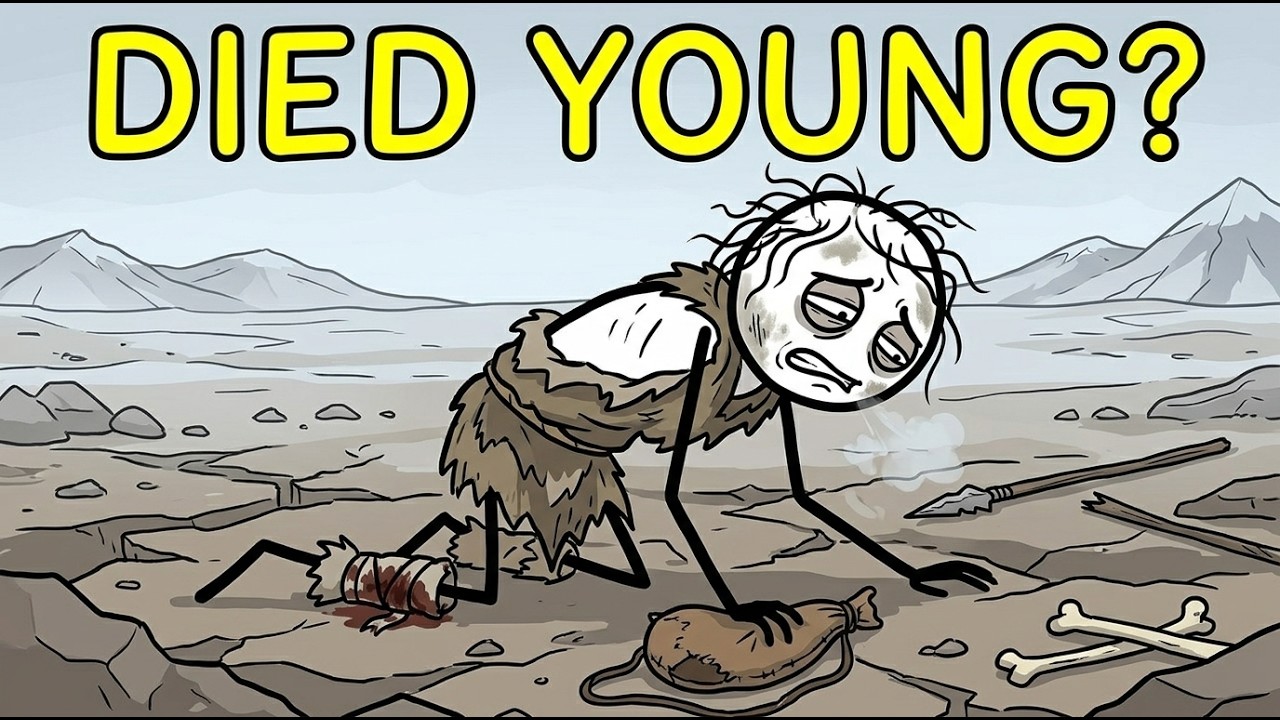 This statistical sleight of hand means the famous “Stone Age life expectancy of 30” describes an average that corresponds to the actual lived experience of essentially nobody in the group. The low figure is a mathematical artifact of high infant mortality, not a reflection of widespread early death among adults who survived childhood. When paleodemographers calculate life expectancy at age fifteen, the picture transforms dramatically, showing that those who survived the brutal early years could reasonably expect to live into their sixties or even seventies.
The question then becomes why childhood mortality was so catastrophically high, and the answer lies in a combination of infectious disease, childbirth complications, and the simple physical fragility of young bodies. Hunter-gatherer populations living in small, mobile, low-density groups were actually relatively protected from many of the epidemic diseases that became major killers later in history, as diseases like smallpox and measles require large, concentrated populations to sustain transmission.
Counterintuitively, the agricultural revolution and the rise of settled, dense population centers substantially increased infectious disease mortality compared to the hunter-gatherer baseline. Agricultural villages created the perfect conditions for epidemic diseases to flourish, with population density, sustained close contact, proximity to domesticated animals serving as reservoirs for zoonotic disease, and contaminated water supplies from concentrated human and animal waste.
Childbirth represented a second major category of mortality risk, affecting both mothers and infants simultaneously. Maternal mortality in pre-modern populations was staggering, with estimates placing the risk of a woman dying from childbirth complications at 1 to 2% per birth. A woman who gave birth eight times across her lifetime faced a cumulative lifetime risk of dying in childbirth that could easily exceed 5 to 8%, meaning roughly 1 in 12 to 1 in 15 women could expect to eventually die as a direct consequence of pregnancy.
The causes of maternal death were grimly consistent across cultures and time periods, including hemorrhage, infection following delivery, obstructed labor that no amount of effort could resolve without modern surgical intervention, and preeclampsia, which was essentially untreatable in any pre-modern context. Infant and child mortality operated through an even broader range of mechanisms, with estimates suggesting that 30 to 50% of children died before reaching adulthood, with the most dangerous period concentrated in the first one to two years of life.
Violence constitutes a third major category of ancient mortality, though its contribution has been the subject of considerable academic debate. Some researchers, drawing on archaeological evidence of trauma in skeletal remains and ethnographic observation of contemporary tribal societies, argue that interpersonal violence accounted for a remarkably high proportion of adult male deaths, with estimates in some specific populations ranging as high as 10 to 20% of all adult male deaths attributable to violence.
 Accidents and environmental hazards constitute a fourth significant category, encompassing everything from animal attacks and falls to drowning and exposure to extreme temperatures. A broken bone that might require a brief hospital visit in the modern world could, in a pre-modern context, lead to infection, prolonged disability, and in severe cases death from complications that modern medicine would treat as routine.
The absence of antibiotics is perhaps the most underappreciated factor in understanding why ancient mortality rates were so much higher across essentially every category of risk. Before antibiotics, a relatively minor wound that became infected could progress to sepsis and death within days, a process that is now almost entirely preventable with a basic course of inexpensive medication. Childbirth infections, surgical infections, pneumonia following a common cold, all of these represented genuine mortal threats throughout almost the entirety of human history.
The gap between ancient and modern mortality is not primarily a story about ancient bodies being fundamentally weaker or less robust than modern bodies, but overwhelmingly a story about the specific tools and interventions available to address threats that have always existed. For the substantial portion of the population that survived past childhood, actual adult aging looked remarkably similar to what we see today, with skeletal remains showing clear evidence of the same age-related degenerative changes that affect modern elderly populations.
Contemporary hunter-gatherer societies studied extensively by anthropologists consistently include elderly individuals well into their 70s and occasionally their 80s. These elderly individuals are not marginal curiosities within their societies but occupy genuinely important social roles, particularly as repositories of accumulated practical knowledge, as caregivers for grandchildren, and as sources of social and political authority within their communities.
The grandmother hypothesis represents one of the more compelling evolutionary explanations for why humans, almost uniquely among mammals, evolved to live substantially beyond their reproductive years. The hypothesis argues that post-reproductive women who survived into old age provided substantial fitness benefits to their descendants by assisting with child care, food provisioning, and the transmission of accumulated knowledge, driving the evolution of an extended post-reproductive lifespan.
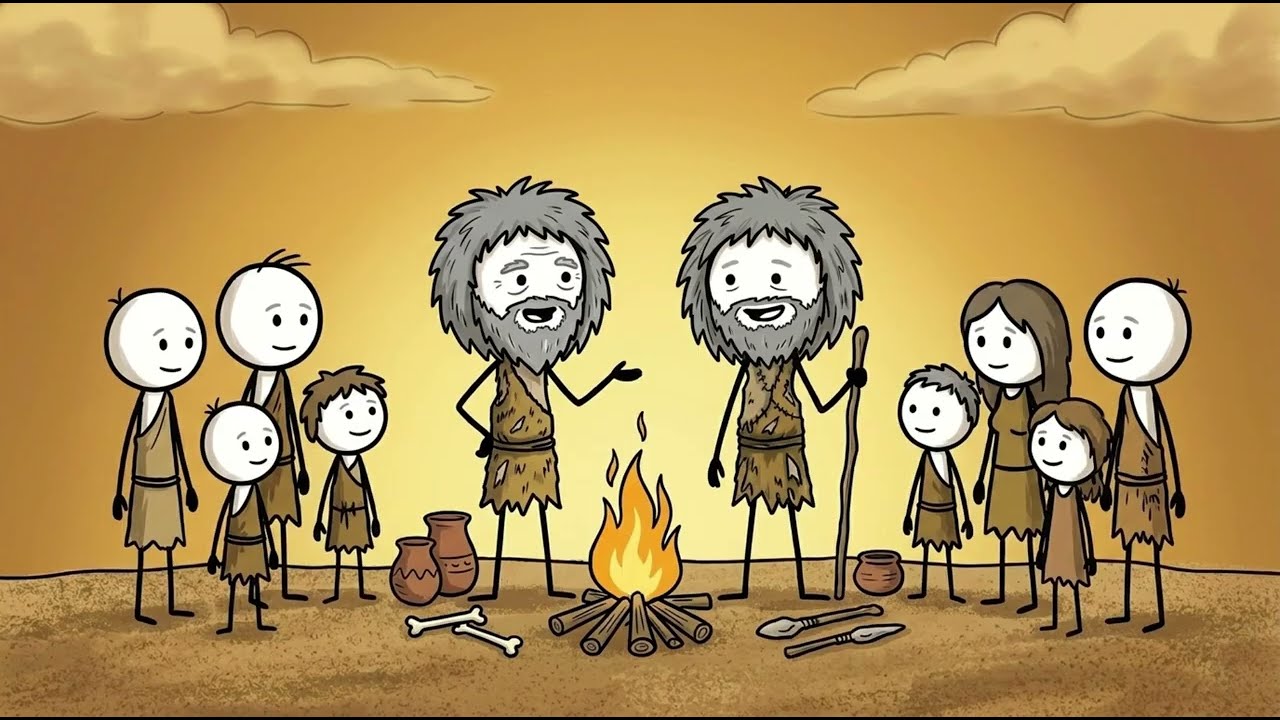 If ancient humans genuinely and uniformly died at 30, there would be no evolutionary pressure to develop the kind of extended post-reproductive lifespan that the grandmother hypothesis describes, because evolution does not preserve traits that never get expressed. The very existence of a substantial population of long-lived grandmothers is itself powerful evidence that long adult lifespans were a real and recurring feature of human existence throughout deep prehistory.
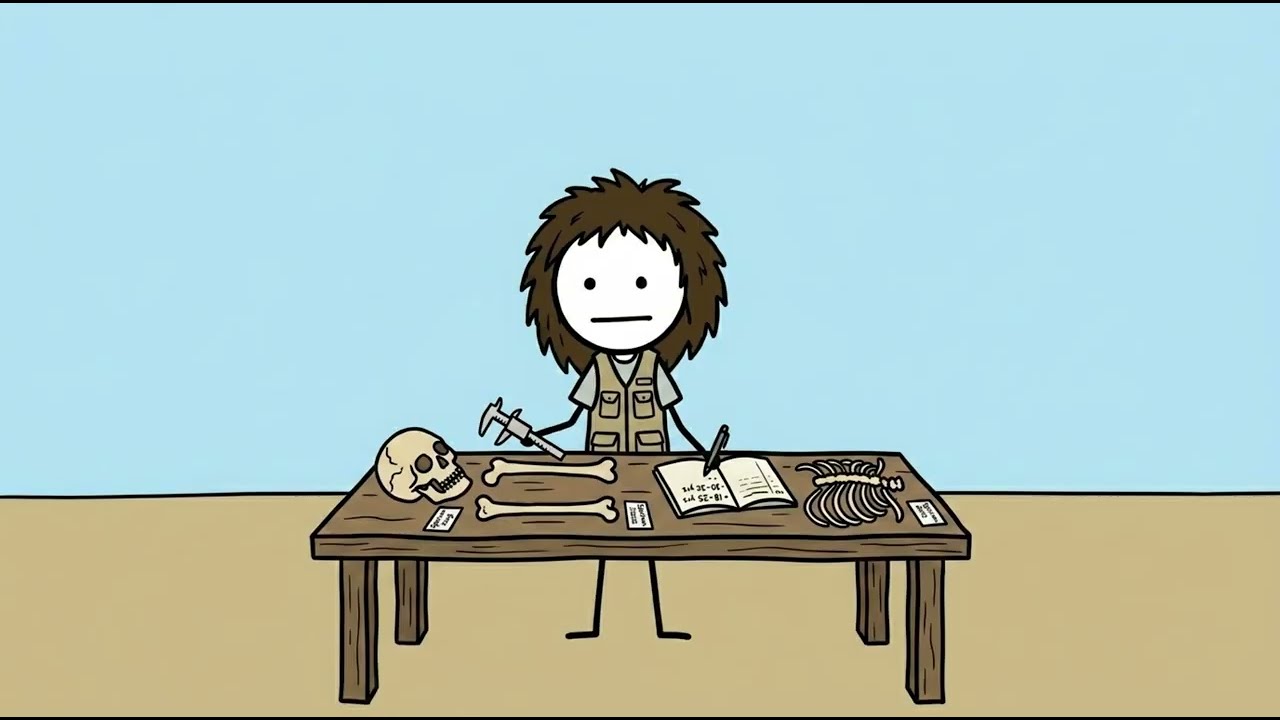
There is another dimension to this story worth unpacking, concerning how paleodemographers actually reconstruct age at death data from skeletal remains. Determining the age at which an ancient individual died relies on biological markers including the fusion of growth plates, changes in the pelvis, dental wear, and microscopic bone density changes. The problem is that these aging techniques become progressively less precise the older an individual was at death.
For decades, the standard practice involved lumping all adults above roughly age 50 into a single broad old adult category without further discrimination, a methodological limitation that had a distorting effect on calculated life expectancy figures. If a population’s skeletal sample includes individuals who actually died in their 60s, 70s, or 80s, but the analytical method could only confidently place them in a broad 50-plus category, then any life expectancy calculation built on that data systematically underestimates the true extent of long adult lifespans.
The skeletal collection from the site of Libben, an Ohio Native American population dating to roughly 800 to 1100 CE, has become something of a textbook example in paleodemographic research precisely because of how thoroughly it has been analyzed. Initial analyses produced life expectancy figures that fit neatly into the popular narrative, with few individuals appearing to survive much past their 40s or 50s, but later reanalysis using updated methodologies produced a substantially revised picture.
A meaningful proportion of the population originally classified into a vague older adult category turned out to include individuals who had lived considerably longer than the original analysis suggested. This case study has become something of a cautionary tale within paleodemography itself, illustrating how methodological limitations in aging older skeletons can systematically distort our understanding of how long ancient people actually lived.
 Comparative studies of contemporary hunter-gatherer populations conducted by researchers including Michael Gurven and Hillard Kaplan found a remarkably consistent pattern across the Hadza, the Ache of Paraguay, the Hiwi of Venezuela and Colombia, and several other groups. High mortality risk concentrated heavily in the first few years of life, followed by a substantial drop during adolescence and prime reproductive years, and then a gradual increase beginning around age 40 or 50.
Their research produced a specific statistic that deserves wider recognition: across the various hunter-gatherer populations studied, the modal age of adult death, the single most common age at which adults actually died, clustered consistently in the range of 70 to 72 years old. This is genuinely striking because it suggests that the single most statistically common outcome for an adult hunter-gatherer who survived early childhood was not dying at 30 or 40, but living into their seventh decade.
There is also a worthwhile comparison to be made with the demographic transition that occurred during the early agricultural period, because evidence increasingly suggests the shift from foraging to farming was not, demographically speaking, a straightforward improvement. Skeletal evidence from early agricultural populations consistently shows reduced average stature, increased markers of skeletal stress, higher rates of dental disease, and in some populations, evidence of increased rather than decreased childhood mortality during the initial transition.
The persistent popularity of the 30-year myth serves a kind of narrative function, fitting neatly into a broader cultural story in which modernity represents straightforward linear improvement over a brutal and short-lived past. The more accurate picture changes how we think about what modern medicine has actually accomplished, revealing that the achievement is not that we have somehow extended the maximum potential human lifespan dramatically beyond what was previously possible.
The actual achievement is more specific and in its own way more remarkable: we have dramatically reduced the proportion of any given population that fails to survive childhood, that dies from infectious disease in adulthood, that dies from childbirth complications, and that dies from injuries that would once have been fatal but are now routinely treatable. We have not extended the ceiling of human lifespan nearly as dramatically as popular imagination suggests, but we have instead dramatically raised the floor.
This is both a more accurate and a genuinely more remarkable story than the simple myth it replaces. It is the story of a species that learned gradually and through immense collective effort across many generations to stop so many of its own members from dying before they ever got the chance to discover how long they might otherwise have lived. The number 30 captures something real and tragic about ancient human existence, but it simply does not capture what most people assume it captures.
The actual story underneath it is both darker in its specific details about childhood and childbirth and brighter in its implications about adult longevity than the flattened popular version most people carry around in their heads. Ancient humans did not uniformly die young, they died young in disproportionate numbers during infancy and childhood, while those who survived that gauntlet lived lives of remarkably similar length to our own, facing the same gradual decline of aging that we recognize today.