For nearly the whole of human history, the single most dangerous thing a person could do on a regular basis was fall asleep. Not because of nightmares, but because sleep left early humans completely defenseless—muscles slack, awareness nearly gone, and the body reduced to an immobile, vulnerable target. From a predator’s perspective, a sleeping human was about as close to a free meal as nature offered. The strongest explanation for communal sleeping is straightforward: predators don’t stop hunting at night.
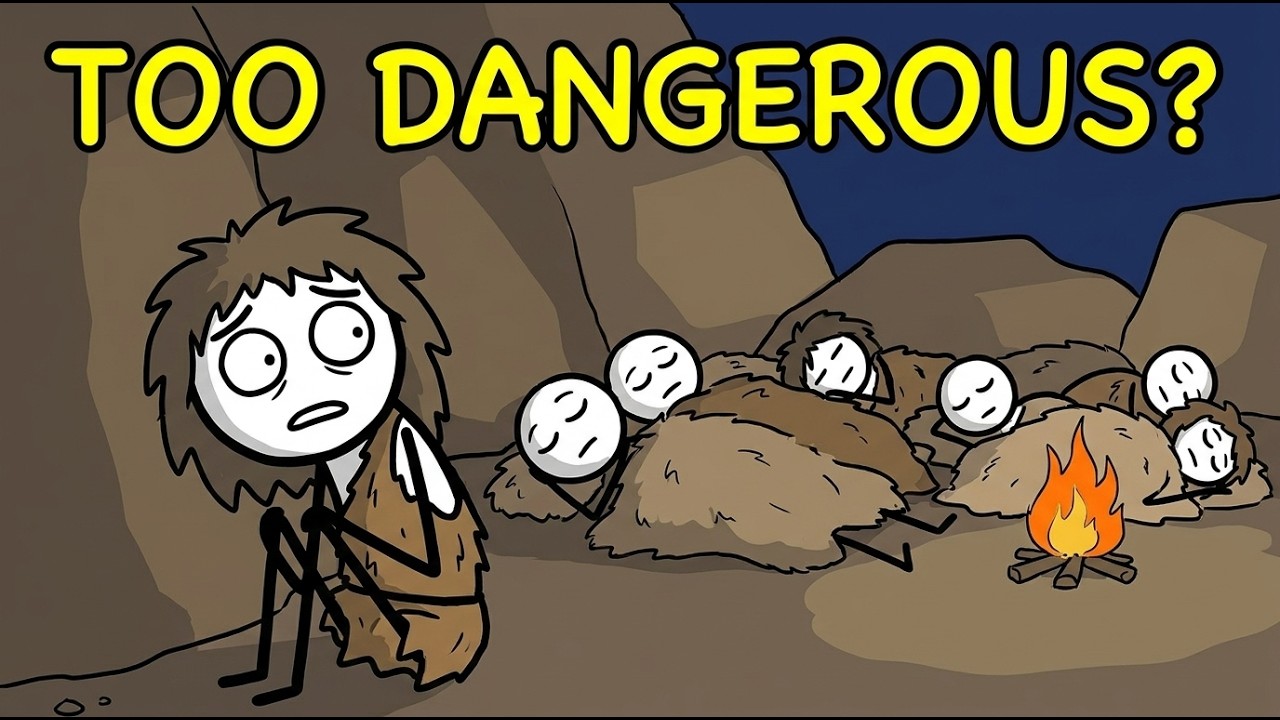
Big cats, hyenas, and other pack predators were often at their most effective during low-light hours, precisely when human vision and reaction times were at their worst. A solitary sleeper was unaware, immobile, and alone—with no one nearby to raise an alarm or intervene. Sleeping in a group changed that risk calculation entirely. Multiple bodies meant multiple sets of senses, and because people naturally cycle through lighter and deeper sleep stages at slightly different times, a group maintained an overlapping baseline of partial alertness throughout the night.
Even without any formal guard duty, someone in the group was statistically likely to be in a light enough stage to notice an unusual sound or movement. This pattern has been documented among contemporary hunter-gatherer populations. Studies of groups like the Hadza and various San communities found that certain individuals tend to wake periodically during the night, sometimes tending the fire or remaining briefly alert before settling back down. This informal, rotating vigilance emerged organically from natural sleep rhythms, but it functioned much like an organized watch system.
Fire added another layer. Group sleeping arrangements were often built around a central fire, which required occasional attention through the night. Those brief periods of wakefulness served a dual purpose: maintaining the fire and scanning the surrounding darkness. Light and warmth radiated outward while clustered bodies provided mutual warmth and overlapping vigilance.
Body heat was itself a serious survival factor. Human body temperature drops naturally during sleep, which becomes dangerous in cold environments without external heat. Close physical contact with others provided passive thermal benefit throughout the night without requiring fuel. For ancient humans in cold climates, sleeping alone wasn’t just a security risk—it was a measurable thermoregulation risk as well.
The structure of ancient sleep also differed from the modern unbroken eight-hour block. Historical records from pre-industrial societies and research on populations without artificial lighting describe segmented sleep: a first sleep period, a middle-of-the-night wakeful period lasting an hour or more, and a second sleep before morning. During that middle period, people engaged in quiet conversation and social interaction within the shared sleeping space. Research led by sleep scientist Jerome Siegel compared sleep patterns across contemporary hunter-gatherer and pre-industrial societies in Africa and South America.
The study found these populations didn’t necessarily sleep longer than modern people, but they showed notably consistent sleep-wake cycles tied to natural light and temperature, along with comparatively low rates of reported insomnia. This suggests sleep quality and consistency, rather than duration, may be where meaningful differences appear. Co-sleeping with infants and young children was among the most universal arrangements across traditional societies. Infants have less developed thermoregulation, are more vulnerable to nighttime threats, and require frequent nighttime feeding and monitoring.
Close proximity allowed caregivers to respond quickly without full conscious wakefulness. Some researchers also point to potential benefits connected to nighttime breathing regulation in very young infants, though this remains an area requiring careful modern safety considerations. Group sleeping did involve real tradeoffs. Snoring, movement, and disturbance were almost certainly recurring annoyances, and individuals varied in how well they tolerated them.
But evolution optimizes for net survival advantage, not comfort. The security, warmth, and overlapping vigilance benefits consistently outweighed the costs, which is why the pattern remained so widespread across independently developing societies. Psychology also played a role. Researchers studying modern sleep have consistently found that perceived safety significantly affects sleep quality, anxiety, and hyper-vigilance.
An ancient human sleeping alone in a genuinely threatening environment would likely have experienced heightened vigilance that interfered with restorative sleep. Sleeping in a group reduced that psychological threat assessment, allowing the brain to partially relax its monitoring systems. Human beings are far from the only primates that sleep communally. Many monkey and ape populations show strong preferences for clustered sleeping arrangements, often in elevated, defensible locations.
This widespread pattern across multiple species facing similar predator pressure suggests communal sleeping is a deeply conserved evolutionary strategy that predates humans entirely. Shared sleeping space also reinforced social bonds. Sustained physical proximity across thousands of nights built trust and group cohesion in ways that occasional daytime interaction alone could not replicate. Choosing to enter your most vulnerable state next to another person, night after night, was a meaningful ongoing signal of trust and belonging.
The modern isolated sleeping arrangement—private bedrooms, solo sleeping as a cultural default, children in separate rooms—is a genuinely recent development. It became possible through larger divided housing, dramatically reduced everyday predator risk, artificial lighting, and cultural shifts prioritizing individual privacy. This recent shift raises a question some researchers have entertained: whether some modern insomnia and sleep anxiety connects to removing humans from the collectively monitored environment our species evolved in. The research is speculative and actively debated, but the thread is worth considering.
During REM sleep, the body experiences near-total loss of voluntary muscle control, a state called atonia. This is the deepest point of physical vulnerability in the sleep cycle—a person is almost completely incapable of defense. Some researchers have speculated that the frightening experience of sleep paralysis, where a person wakes while atonia is still partially active, may connect to deeply ingrained anxiety about this exact moment of maximum vulnerability. Sleeping arrangements likely varied with environmental risk.
Groups in lower-predator environments or secure locations like deep cave systems may have faced less pressure toward maximum sleeping density than those in open, exposed environments. This suggests the strategy was flexible and risk-responsive rather than a rigid universal rule. The sleeping brain also retains a surprising capacity for selective auditory processing. Research has found that sleeping people wake more readily to meaningful sounds—a parent to their own child’s cry, for example—than to comparable background noise.
In a group setting, members likely developed selective sensitivity to sounds associated with genuine danger, distinguishing an unusual rustle from the routine noise of others shifting nearby. Archaeological burial practices provide indirect evidence of the centrality of communal proximity. Many ancient burial sites across unrelated cultures show multiple individuals buried together in close physical proximity, sometimes in postures echoing shared sleeping positions. The consistent clustering suggests a deep association between safety, belonging, and physical closeness to other group members.
Modern military and survival training has independently arrived at similar conclusions. Contemporary tactical training recommends group sleeping with rotating watch responsibilities in hostile environments—essentially reinventing, through necessity, the same strategy ancient humans apparently developed organically. This convergence strongly suggests the practice reflects a fundamentally sound response to a real problem. The honest answer to why ancient humans didn’t sleep alone is that sleep represented genuine, serious vulnerability, and clustering together directly addressed it through overlapping vigilance, shared warmth, organized fire maintenance, psychological security, developmental benefits for children, and social bonding accumulated across thousands of shared nights.
Solitary sleep would have had no good reason to be chosen. That sense of being comfortably alone while unconscious, in a quiet locked room, is a strange and very recent luxury in the full context of human history. For nearly the entire story of our species, sleep was never something you were supposed to do by yourself.
It was something you survived together—one shared, overlapping, collectively watched-over night at a time.