The popular image of ice age survival is simple: a small band of ancient humans huddled around a campfire in a cave, enduring the cold through sheer toughness. But that image is misleading. Fire alone was never enough to survive months of brutal winter on the Eurasian steppe, where open land and killing winds could turn a small mistake into a death sentence. The real story of human survival through the ice age is a story of engineering, planning, and intelligence.
Modern cold is walking from a car to a house. Ice age cold was a force that attacked exposed skin, stiffened hands, and made minor errors fatal. A wet sleeve could freeze into a band of ice. A weak shelter could become a coffin.
A dying fire could mean a dead child by morning. Toughness alone could not beat physics, and courage meant nothing to wind and frost. Instead of relying on brute endurance, early humans built smart systems. One of the most important was location.
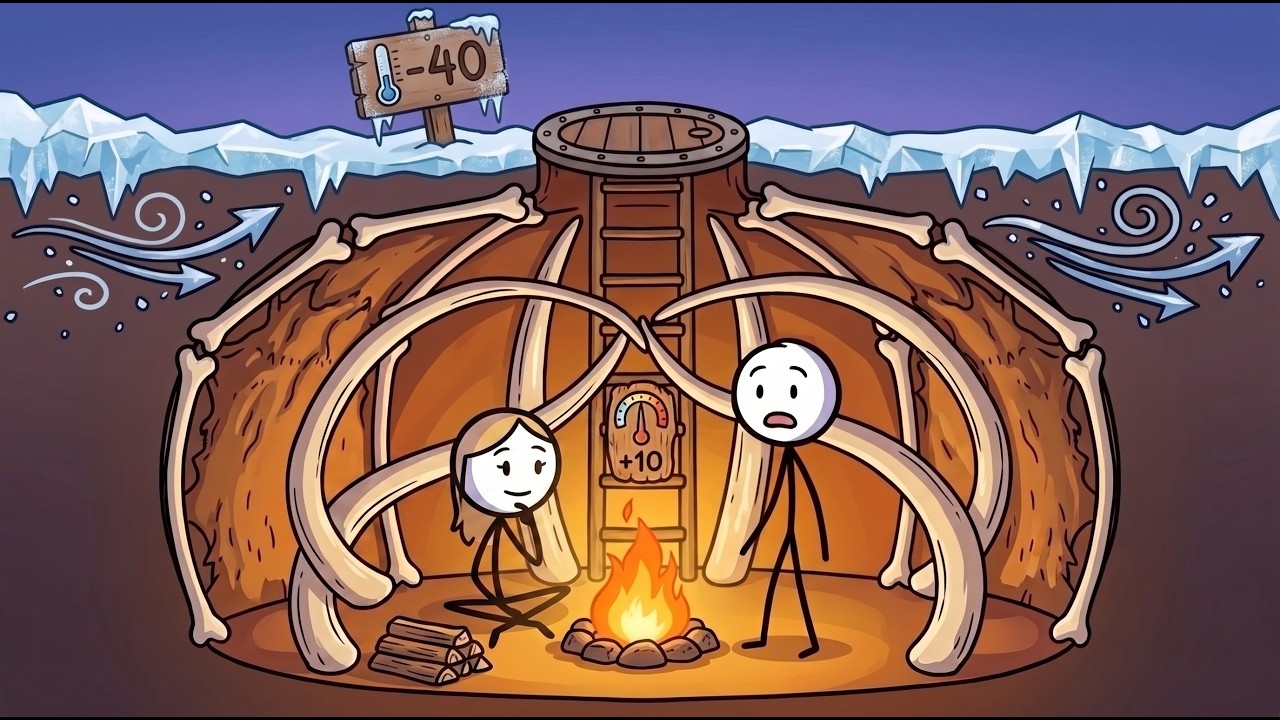
They learned that the surface lies: while the air above ground could be deadly, the earth below was more stable. By digging down just a few feet, they found temperatures warm enough to matter. Their first winter houses were often not structures built upward, but pits dug into the ground, using the planet itself as insulation. The materials they used were ancient, but the physics were modern.
Shelters used layered systems where different materials performed different jobs: hides trapped heat, fur held warm air near the body, moss absorbed moisture, and earth acted as a thermal buffer. Bone provided structure, and even snow could serve as insulation. There were no science textbooks, but winter punished bad design. A shelter that trapped too much moisture could freeze from the inside, while one that leaked smoke could poison its occupants.
The balance between holding heat and allowing breath was a genuine engineering problem. Preparation was another crucial factor. Ancient humans did not simply endure winter when it arrived; they worked through late summer and early autumn to gather materials, scrape hides, dry grasses, repair frames, and store fuel. By the time the deepest cold hit, it was already too late to prepare.
Those who waited died. Some ice age humans went even further, building homes from the bones of mammoths. Hundreds of bones were arranged into circular frames and domes, then covered with hides, weighted down, and sealed. Tusks became arches, skulls became anchors, and hides became walls.
The same creatures that could kill a hunter on the open steppe could later hold a roof above a sleeping child. This was not a random pile of bones; it was deliberate architecture that accounted for shape, weight, snow load, and heat zones. Even fire required systematic management. A central hearth warmed the main living area, while smaller fires supported specific tasks.
Fuel was not always wood, since trees could be scarce on the open steppe. Dried dung and properly prepared bone could burn, and different fuels had different properties: some burned hot, some lasted longer, some were better for cooking. Ancient people were not just making fire; they were budgeting heat, and heat was life. Ventilation was another overlooked problem.
A fully sealed shelter seems like it would be ideal, but trapped moisture could freeze, trapped smoke could damage lungs, and stale air could become dangerous. Shelters needed small openings and controlled airflow to balance warmth with breathability. It was a difficult problem that even modern builders still wrestle with, but ice age humans solved it using stone tools and animal skins well enough to survive. Inside the shelter at night, survival became culture.
People slept close together because shared body heat mattered. Someone always woke to feed the fire, listen for wind shifts, and check the entrance. The long nights forced people inward, into the firelight, into each other’s company. Stories told around the fire were not just entertainment; they were storage.
Before books, the mind was the library. Warnings became myths, hunting lessons became legends, and memory became identity. A child learning where not to walk and which animal to fear was receiving vital survival knowledge disguised as storytelling. This planning ability may be one of the deepest human powers.
Most animals react to winter; humans prepared for it months in advance. A person standing in autumn could imagine a future cold night and work to protect against it. That ability to plan beyond the moment is civilization in seed form, not cities or writing, but preparation. The notion that ancient humans were barely making it, always miserable and less intelligent than us, is also false.
Most modern people could not find fuel in a treeless frozen landscape, tan a hide, build a windproof shelter, or keep a fire alive overnight. We are not smarter because we are warmer; we are warmer because they were smart. Every modern convenience, from attic insulation to the vent in a bathroom, inherits ancient survival intelligence. Even now, a winter storm that cuts power can trigger something old in the body.
When the heater stops and the lights go out, the modern world disappears and an ancient alarm returns: protect the heat, protect the group, survive the night. That instinct never fully left. Warmth today feels normal, but for most of human existence, it was earned, carried, repaired, guarded, and planned months in advance. It was the difference between a family and a frozen silence.
The real survival secret was never just fire; it was cooperation, engineering, memory, and the refusal to let winter decide who lived.