For roughly a decade, a young man immobilized by a fused spine and paralyzed limbs was fed, repositioned, and kept clean by other members of his Neolithic community in northern Vietnam. He died between the ages of 20 and 30, around 4,000 years ago, after living with a condition that made independent survival biologically impossible. Archaeologists found his remains at the Man Bac burial site, where his skeleton showed the advanced stages of Klippel-Feil syndrome type three, a fusion of the cervical and upper thoracic vertebrae into a single rigid column. His skull was permanently tilted from severe torticollis, and his jaw joints had degenerated.
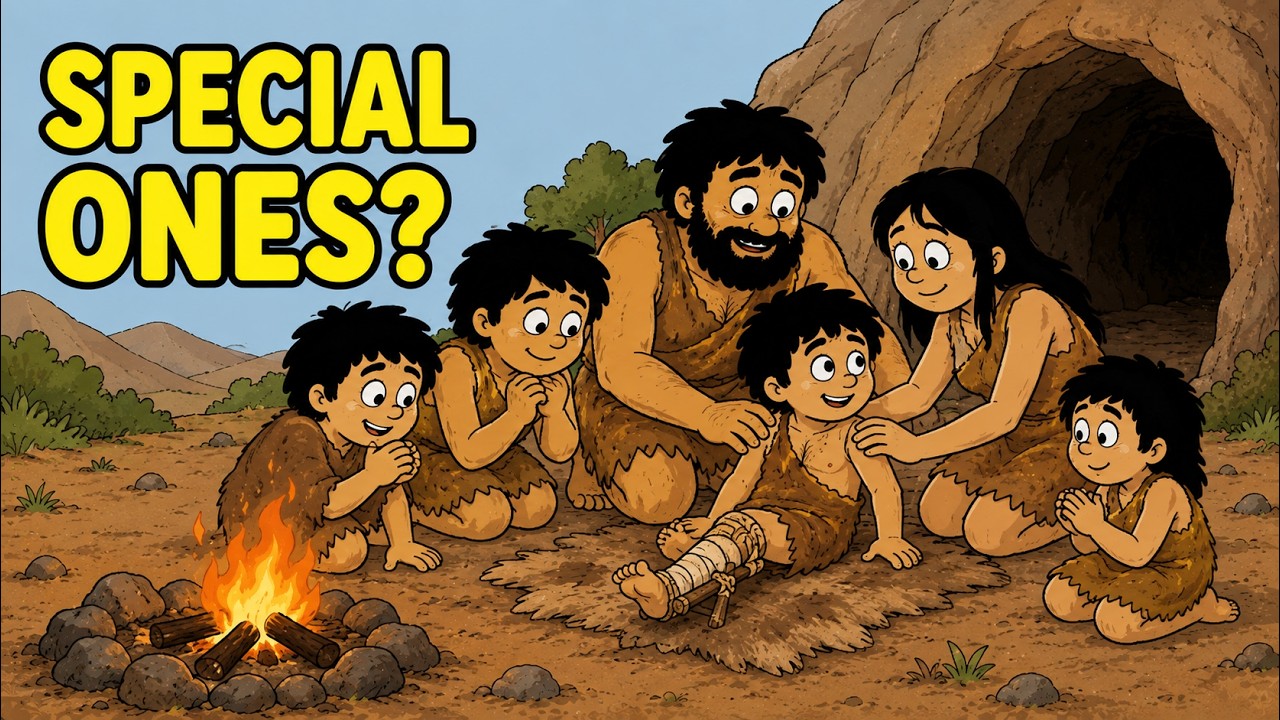
The long bones of his limbs displayed dramatic disuse atrophy, meaning they had grown thin and fragile from years without mechanical use. Beginning in early adolescence, he lost function in his lower body entirely and had severely limited arm movement, a state researchers describe as functional quadriplegia. Because bone remodeling takes years, his survival into adulthood is considered biological proof of sustained social intervention, not an isolated act of charity but a decade-long commitment of daily care. Bioarchaeologists use a formal framework called the bioarchaeology of care, developed by researcher Lorna Tilley, to interpret such evidence.
The methodology identifies the condition, assesses its clinical impact on daily function, reconstructs the type of care required, and interprets what that care implies about the social group. Care is divided into two categories: direct support, such as feeding, dressing wounds, and physically moving a person, and accommodation, such as adjusting the group’s pace or reallocating tasks. Both types are visible in the archaeological record, and in the most striking cases, both had to occur simultaneously for survival to be possible. The Man Bac man is not an isolated case.
In a cave in southern Calabria, Italy, archaeologists found the remains of a woman from the Epigravettian period, roughly 11,000 years ago, who had acromesomelic dwarfism, severely shortened forearms and lower legs, and stood about 110 to 120 centimeters tall. She could walk, but slowly, through mountainous terrain in a glacial climate, conditions that demanded long-distance movement for survival. She survived to late adolescence, which means her mobile hunter-gatherer group adjusted its travel pace to accommodate her. When she died, she was buried in a structured double grave alongside another adult female and marked with the horns of an aurochs, a massive extinct bovine with significant ritual importance.
The earliest known case of long-term survival with severe disability predates both of these by tens of thousands of years. At Shanidar Cave in northern Iraq, a Neanderthal male designated Shanidar 1 survived to an estimated age of 40 to 50 years, roughly 45,000 years ago. His skeleton showed severe trauma to the left side of his skull, which likely caused blindness in his left eye, a withered and partially amputated right arm, significant damage to his lower limbs, and severe arthritis. He lived with these conditions across years, possibly decades, of adult life in a cold, harsh environment.
His survival indicates that the capacity for extended social support predates anatomically modern humans and may be older than our species itself. The agricultural revolution, beginning around 12,000 years ago, created contradictory conditions for people with impairments. Permanent settlements made some forms of disability easier to accommodate, as stored food and fixed shelters replaced constant movement. But agriculture also introduced new physical dangers, including repetitive labor injuries and zoonotic diseases from domesticated animals.
It also created economic inequality, and material resources became the single most important factor determining how a disabled person actually lived. Ancient Egypt provides one of the clearest examples of this resource-dependent reality. Tomb art depicts individuals with dwarfism, atrophied limbs consistent with poliomyelitis, clubfoot, and blindness, and these figures were not hidden from the visual record. The tomb of Seneb, a high-ranking official from the Old Kingdom around 4,500 years ago, contains a painted sculpture of him seated cross-legged in the traditional posture of high-status men.
Seneb had dwarfism, and his tomb art unambiguously represents his condition while maintaining his dignity and status. He held significant administrative responsibility at the royal court. Egypt also produced what is almost certainly the oldest known functional prosthetic device, an artificial big toe made of wood and leather with a flexible hinged joint, found attached to the foot of a mummified woman near Thebes. Wear patterns confirmed she used it during her life to restore balance and gait.
The Edwin Smith papyrus, dating to around 1,600 years before the Common Era, categorized spinal injuries, dislocations, and trauma with clinical precision, classifying each case as treatable, potentially treatable, or untreatable. Classical Greece presents a more contradictory picture. Greek philosophy elevated the ideal of the perfect body through the concept of kalokagathia, the alignment of physical beauty with moral virtue. Plato’s Republic described an ideal city where the physically impaired would not be treated by physicians, and Aristotle’s Politics stated there should be a law against rearing deformed children.
These passages have often been cited as evidence of Greek contempt for disabled people, but they were philosophical arguments about hypothetical ideal states, not descriptions of family behavior. The distinction between literary idealism and social reality is critical. The Greek pantheon itself incorporated disability. Hephaestus, the master craftsman god, was depicted as lame throughout Greek art and mythology, and his physical difference was inseparable from his extraordinary technical skill.
The figure of Tiresias, the blind prophet whose insight exceeded that of any sighted person, belonged to the same tradition, associating blindness with prophetic vision and poetic inspiration. The most famous story about ancient Greek disability is almost certainly a myth. The claim that Spartans threw disabled infants from Mount Taygetus into a pit called the Apothetae has been repeated for generations, but its only primary source is Plutarch’s Life of Lycurgus, written 500 to 800 years after the events it describes. Plutarch was writing moral biography for a Roman audience, not history in the modern sense.
Excavations of the Kaiadas chasm near Mount Taygetus recovered skeletal remains belonging almost exclusively to adult males between 18 and 35, identified as prisoners of war, executed criminals, and traitors. There were no infant remains consistent with the systematic disposal of disabled newborns. Moreover, King Agesilaus II, one of Sparta’s most important military and political figures, was born with a severely impaired leg, walked with a pronounced limp, underwent the full agoge, ascended to the throne, and led campaigns for nearly four decades in the 4th century BCE. Athens left direct documentary evidence of state-organized support.
A speech by the orator Lysias from the late 5th century BCE records the legal defense of a citizen accused of fraudulently receiving a state disability pension. The defendant, who walked with two crutches, argued that his condition and financial circumstances entitled him to a daily stipend guaranteed by Athenian law to citizens whose impairments prevented them from earning a living. The mechanism was not charity but law. Architectural research has also found that stone access ramps were deliberately constructed at major sanctuaries, including 11 separate ramps at the Asklepieion at Epidaurus and a wide stone ramp approach to the Athenian Acropolis.
Rome recognized physical and cognitive impairment formally under law. The Digest of Justinian allowed individuals whose conditions prevented them from managing their property to be assigned a legal guardian called a curator. Roman legal tradition permitted the exposure of infants described as strikingly deformed, but poverty was the primary driver of exposure far more consistently than disability. Foundlings were routinely rescued and raised by other families, sometimes as free members of new households, sometimes as enslaved laborers.
Emperor Claudius, who ruled from 41 to 54 CE, lived with physical tremors, a pronounced limp, and speech difficulties. He was mocked by political rivals, and his uncle Augustus found his condition embarrassing. Yet Claudius received an elite education, became a serious historian, and ruled for 13 years after the Praetorian Guard declared him emperor, leaving a significant administrative legacy. Ancient religious frameworks added another layer of complexity.
Unusual physical features were often interpreted as signs, called prodigia, of divine communication. The interpretation was not automatically negative. Blindness in particular was associated with access to knowledge that physical eyes could not perceive, as with Tiresias and the traditional image of Homer as a blind poet. The archaeological record establishes that ancient humans, across cultures and tens of thousands of years, sometimes provided sustained, substantial care to individuals with severe impairments.
Cases include Romito 2 in Paleolithic Italy, Shanidar 1 in Neanderthal Iraq, and Langhill Burial 7 in Neolithic Britain, where an individual with congenital upper limb dysgenesis reached mature adulthood. The pattern is consistent and geographically widespread. What the bones cannot tell us is the emotional texture of those relationships, whether care was given gladly or resentfully, or what the individuals themselves believed about their lives. What the evidence does demonstrate is the extraordinary flexibility of human social organization.
Some people with severe impairments survived for decades, while others clearly did not, reflecting the variation of specific communities, individuals, and resources. Ancient communities were neither uniformly brutal nor uniformly humane. They were capable of both cruelty and care, sometimes within the same household.
The capacity for care preceded civilization, and the bones in the ground preserve a history of relationships that no written record ever acknowledged.