Melissa Sue Anderson joined the cast of *Little House on the Prairie* in 1974 as a 12-year-old, arriving with a quiet professionalism that immediately set her apart from the playful energy surrounding her. While other child actors formed easy friendships between scenes, Anderson often stood at a distance, focused on the emotionally demanding storylines she was asked to carry. Born in Los Angeles on September 26, 1962, Anderson began her career in commercials, where directors noticed an uncommon seriousness in the young girl. She listened carefully, responded precisely, and carried herself with a maturity that distinguished her from other children in the industry.
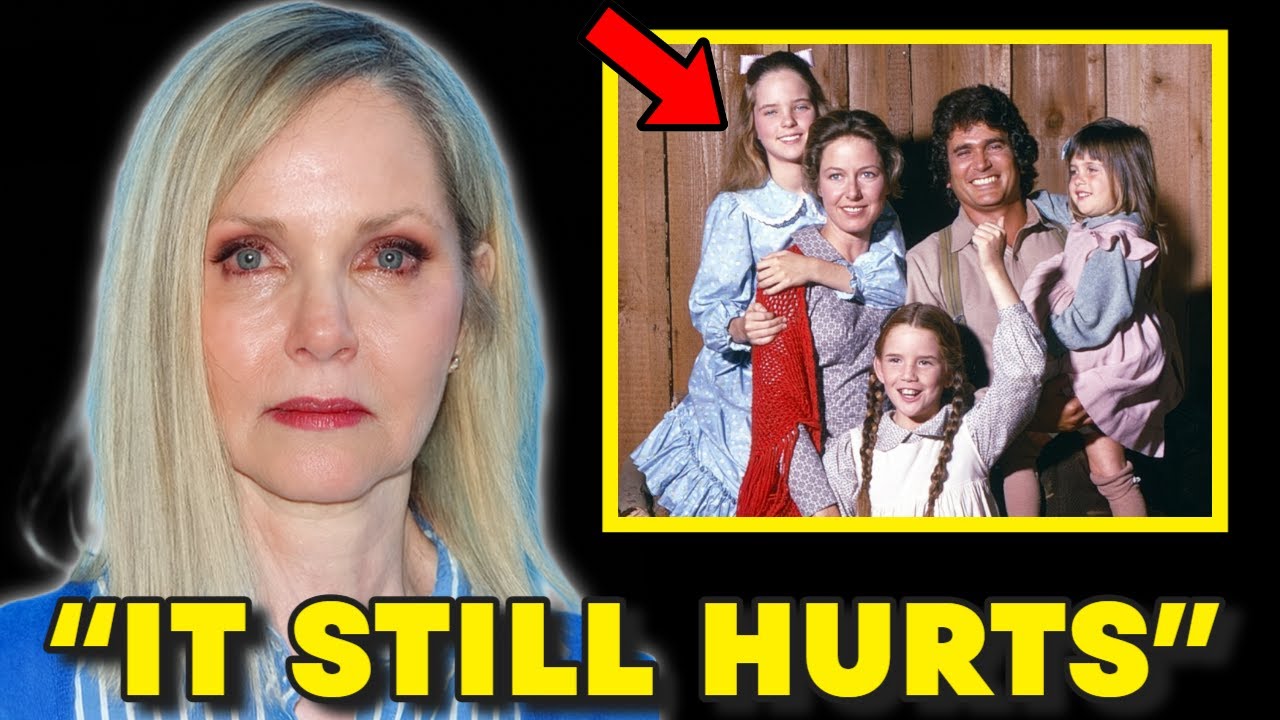
Her reputation as a reliable young performer led casting directors to invite her to audition for *Little House on the Prairie*. She read for the role of Mary Ingalls and clicked immediately, offering the calm steadiness the character required. The demands of the series far exceeded anything she had faced in commercials. Long days, heavy scripts, and the need to deliver believable performances week after week shaped her approach to the work.
While many child actors brought playful energy to the set, Anderson treated her role like a young professional, memorizing lines with care and remaining focused even when others drifted. Her natural reserve, admired by some and misunderstood by others, created a subtle divide. The maturity that earned her praise from directors like Michael Landon also made the easy camaraderie of her castmates feel out of reach. Anderson was not aloof; she was focused, and that focus required emotional space.
Between 1974 and 1981, Anderson filmed 163 episodes of the series. Her character, Mary, was given storylines built on responsibility, restraint, and quiet dignity, in contrast to the lighter moments enjoyed by other young actors. The show’s long hours and emotional intensity compounded the separation, leaving Anderson often preparing alone during breaks while others laughed and unwound. The actress became trusted to deliver emotionally layered scenes, and that trust came with pressure.
Mary rarely lived within light-hearted story arcs, enduring hardship, disappointment, and deep emotional pain. To meet these demands, Anderson remained centered, protecting the emotional continuity her character required. A defining chapter came with the blindness storyline in the late 1970s. The arc demanded that Anderson portray fear, grief, acceptance, and resilience at an age when she had not yet fully experienced those emotions in her own life.
Her performance earned critical acclaim and made her the only cast member ever nominated for an Emmy for work on the series. The intensity of the blindness arc shifted her presence on set. Filming for the School for the Blind storyline took place away from the main Walnut Grove set, creating physical distance from the cast she had grown up with. The role of Mary as a teacher for the blind required Anderson to carry authority and adulthood on screen long before she reached adulthood herself.
By 1981, Anderson felt a natural pull toward new challenges. The writing for Mary had begun to narrow, offering fewer opportunities for the layered performances that had defined her earlier work. Anderson herself later described some of those later storylines as leaning too far into melodrama, lacking the emotional grounding of earlier seasons. Her departure that year was not dramatic or marked by conflict.
She returned briefly in the eighth season for guest appearances, offering viewers a glimpse of Mary’s adult life. Walking away, she later indicated, was not a rejection of her work but an acknowledgment that growth required stepping into something new. Her age contributed to the distance she felt. By her late teens, many of the younger cast members remained in childhood, while Anderson had spent nearly a decade navigating long hours, intense scripts, and the quiet pressures of early fame.
Caring for her castmates, she nonetheless found that her emotional maturity set her apart. After leaving the series, Anderson took on roles in projects such as *The Equalizer*, continuing to demonstrate the discipline that shaped her earliest performances. She married writer and producer Michael Sloan, a partnership rooted in stability and shared creativity. Together they raised two children, and Anderson stepped back from the public eye while continuing her craft.
In 2009, she published a memoir reflecting on her years in the industry. In its pages, she wrote honestly about her work ethic, her solitude, and the emotional demands that had followed her from childhood into early adulthood. Rather than dramatizing her experiences, she examined them with the same measured calm she had carried throughout her career. The theme of isolation ran throughout her reflections.
From the quiet temperament that set her apart in childhood to the heavy storylines that separated her from lighter moments shared by other actors, solitude had been a constant. Yet rather than weakening her, it sharpened her professionalism, teaching her how to focus and how to carry responsibility with maturity. That independence stayed with her long after she left Walnut Grove. As an adult, it gave her the freedom to choose work aligned with her values and to build a life anchored by family, creative partnership, and confidence earned through sustained dedication.
Anderson’s journey was not defined solely by fame or the challenges of her youth. It was defined by resilience, respect for her craft, and the ability to move forward with grace even when the path demanded more of her than it did of others her age. Her memoir revealed a woman who understood herself with rare clarity, able to look back without bitterness and honor the sacrifices of her youth.