MOSCOW — The Tuesday afternoon in the university library was unremarkable until the man in the plain brown suit sat down across from the 19-year-old electrical engineering student. The stranger already knew his exam scores, his roommate’s name, and that he had stayed late in the engineering lab the previous Thursday. He slid a single form across the table, a willingness to be considered for service in the KGB, and the young man signed without being told what the work would involve.
This was 1968, and the state was asking. Declining was never really an option.
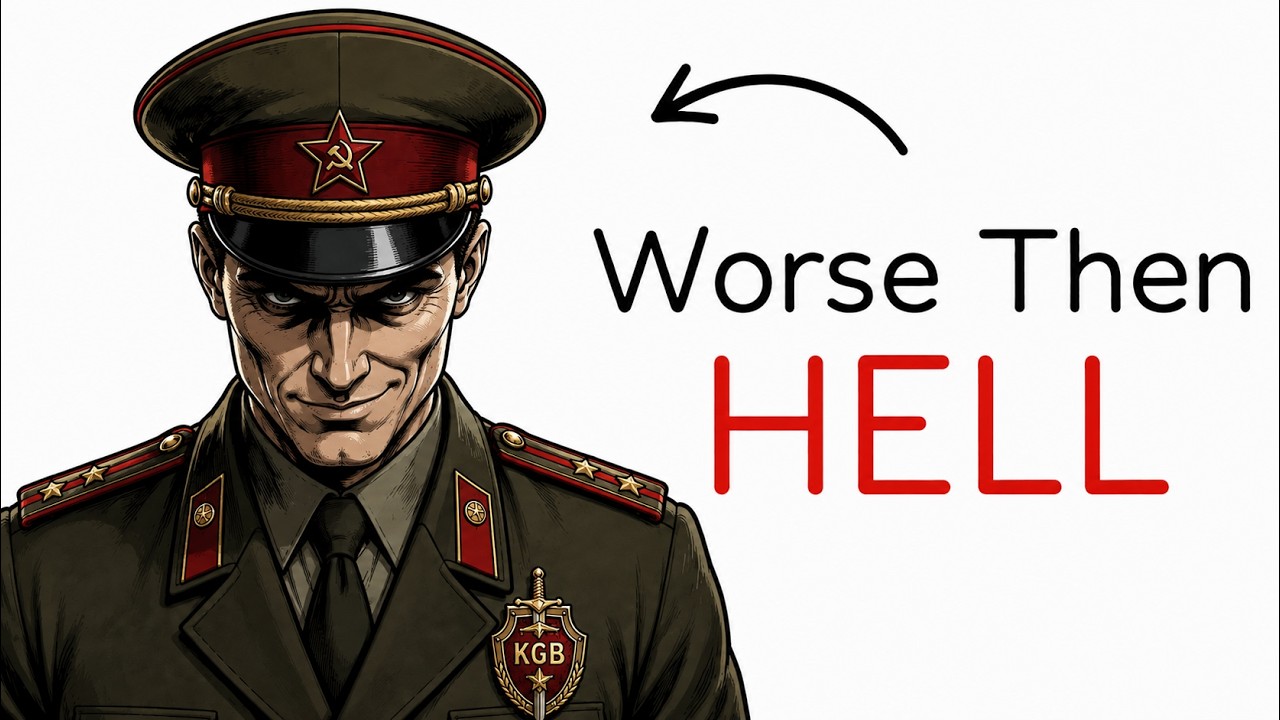 That moment, described in extraordinary detail in a newly circulating account of a career inside Soviet state security, marks the beginning of a 44-year arc that mirrors the rise and fall of the most feared intelligence apparatus of the 20th century. The narrative traces a single officer from junior lieutenant to colonel general, from the KGB Higher School in Moscow to East Berlin, Toronto, and finally to the quiet irrelevance of a system that devours its own. What emerges is not a spy thriller but a clinical anatomy of what the state takes from a person, in measured increments, over decades.
The training was relentless. Law, foreign languages, surveillance methodology, counterintelligence theory, cryptography, and Marxist-Leninist doctrine, all delivered in equal measure within a barracks-like school on the southwest edge of Moscow. Physical conditioning ran alongside classroom work, with hand-to-hand instruction from a former paratrooper who never explained why a desk-bound officer needed to disarm a man twice his size.
Cadets learned to memorize a room in four seconds, cataloging exits, faces, and potential weapons. Mock recruitment scenarios in basement rooms were graded on approach, and by the fifth attempt, something in the recruit’s voice had changed, a warmth deployed on purpose rather than by accident.
At 23, the newly promoted lieutenant was assigned to the Fifth Chief Directorate, the branch created in 1969 to suppress ideological dissent inside the Soviet Union. The desk was in Minsk, and the case load was filled with individuals flagged for passive ideological deviation. People who had not committed crimes, only expressed opinions in a letter to a cousin or a poem passed between colleagues.
One subject, a 47-year-old turbine engineer named Vulof, had written that Soviet agricultural output was “a tragedy of administration.” The letter was intercepted at a postal monitoring station. It became a file.
The file became an assignment. After four months of documenting the man’s routine, the lieutenant recommended a “prophylactic conversation,” a formal warning rather than an arrest. By the following Monday, Vulof had stopped writing personal letters entirely.
The file was marked resolved.
The officer did not feel pride or guilt. He felt efficient. “That is the first thing the KGB takes from you,” the account states.
“Not your conscience, but the space between conscience and action.” A second case that year involved a school teacher named Lavina, flagged after a parent reported she had described a banned poet’s work as more honest than assigned material. She sat calmly across from him in a windowless office, seemingly already accepting that this was always going to happen to someone in her position.
She thanked him on her way out a small, strange politeness he would think about longer than almost anything else that year.
By 26, the officer was promoted and transferred to the First Chief Directorate, foreign intelligence. His first overseas posting was East Berlin in 1975, operating under diplomatic cover at the Soviet trade mission. The Stasi and the KGB ran parallel operations on the same streets, sometimes cooperating, sometimes quietly competing for the same assets.
 He cultivated agents on the Western side of the Wall, a West German trade official with gambling debts, a French embassy secretary whose mother was born in Minsk, a British technical consultant who believed capitalism was morally bankrupt. Each required a different approach. Pressure, sympathy, ideology.
Intelligence work, he learned, was not about secrets. It was about understanding what people need badly enough to betray everything else.
The British consultant passed summaries of technical procurement discussions between NATO contractors, graded as significant value for three days. Then he missed two consecutive contact windows. Moscow Center ordered the officer to wait.
Six weeks later, a British newspaper carried a short item about the arrest of a defense industry employee on suspicion of passing information to a foreign government. The description roughly fit. The file was closed without explanation.
The posting continued. Nobody asked how the officer felt about it.
Back in Moscow at 29, promoted to captain and assigned to the Investigations Department, the division that worked directly with the prosecutor general’s office, the officer’s work took on a heavier weight. He interrogated a philologist named Chnikov across 11 sessions over three weeks, using trained nonviolent psychological pressure, sleep disruption, prolonged isolation, and inconsistent scheduling. By the seventh session, Chnikov had given four names, colleagues who had received copies of a banned novel.
He was sentenced under Article 70, seven years in a strict regime labor camp and three years of internal exile. The case summary received a commendation: “Efficient, clean, no procedural errors.” Six more cases followed that year, each following the same shape.
The officer began to recognize a look on subjects’ faces in the session where they stopped fighting the schedule and simply agreed, a look he privately called “the turn.” He slept without difficulty. That was the second thing the KGB took from him.
The call for Directorate S came at 32. The illegal program required officers who would operate abroad with no diplomatic cover, under fully fabricated identities, unconnected to anything traceable back to Moscow. If caught, the state would not acknowledge they existed.
He spent 14 months building a legend before leaving the country, a fictional Canadian childhood, invented parents, school records planted years in advance. He practiced an accent until his real one felt foreign. He deliberately forgot small true facts about his own childhood, replacing them with a stranger’s because the danger was a slip years later at a dinner party when an easy question would get the real memory to answer first.
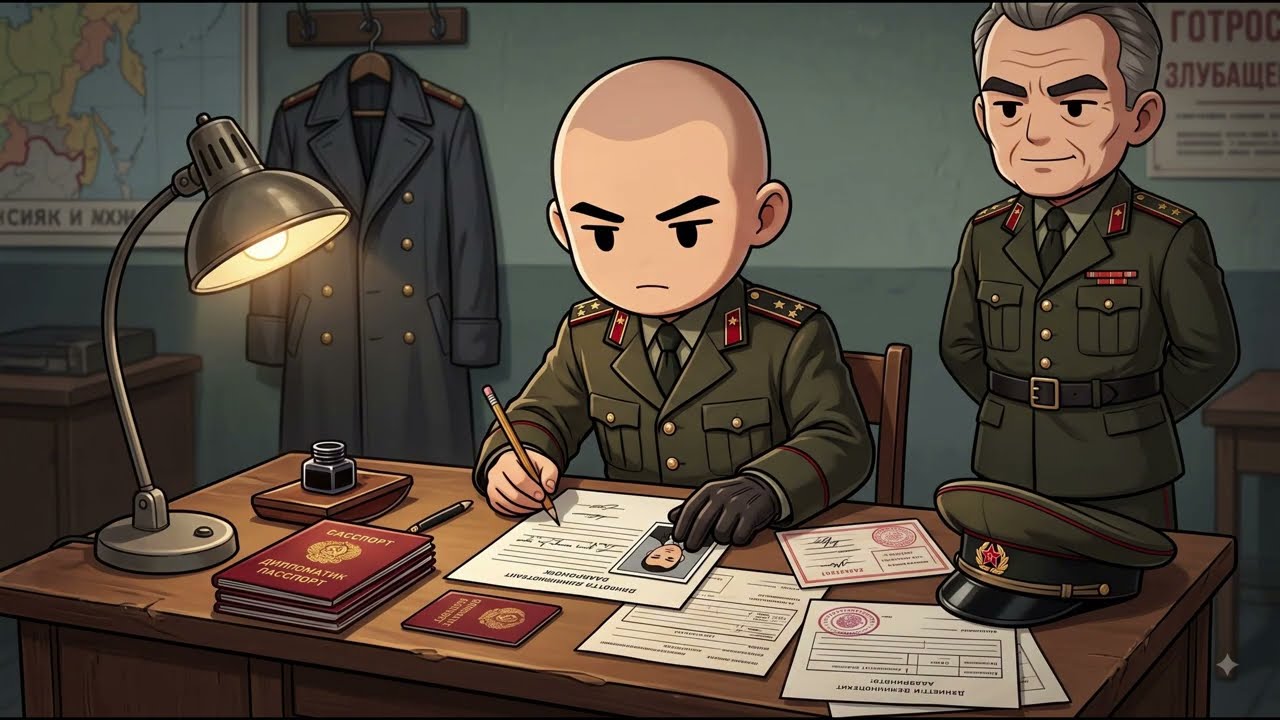 Deployed to Toronto in 1981 as a photography equipment importer, he built a business and a small circle of friends who believed entirely they knew him. He attended a neighbor’s wedding. He dated someone for 11 months and ended it carefully before it became something requiring decisions he was not permitted to make.
He communicated with Moscow only through dead drops and pre-arranged radio bursts. He went two years at one stretch without a single conversation in his own language. When he was recalled in 1988 after completing the operation, nobody asked how he readjusted to being himself again.
There wasn’t a form for that question. That was the third thing the KGB took from him: not his name, but the certainty of which version of him was ever real.
By 1990, at 41 and promoted to major, he was monitoring foreign diplomats and journalists on Soviet soil. Glasnost was policy, and his directives were contradictory. A surveillance operation under his oversight produced fabricated materials from a source his unit had run for 11 months.
An internal review found systemic procedural weakness. His next promotion cycle passed without action. A colleague’s son was arrested at a demonstration in front of the very building where they worked and released within hours.
Nothing happened to either of them. Nobody above him knew how to feel about it.
The dissolution of the Soviet Union in 1991 formally dissolved the KGB, reorganized into successor agencies. The officer was reassigned, promoted to lieutenant colonel, and transferred into the newly formed domestic service. His record showed operational continuity, a man who kept the machinery running while everything around it changed.
The 1990s were lean. Former colleagues left for private security work protecting the newly rich. He complied once with a request to look the other way on a case connected to someone with the right introduction, telling himself it was minor.
It was the first time in 25 years he had made a professional decision based on something other than the file in front of him.
By 2001, with Vladimir Putin as president, the security services were being rebuilt and elevated. The phrase “The Chekists are back” circulated with pride in Moscow’s corridors. The officer, now 52 and a colonel, found his opinions solicited in writing before senior meetings.
 He was cited in policy memos by position, not by name. That was how he knew he mattered. But when a foreign intelligence network he had endorsed years earlier was 𝓮𝔁𝓹𝓸𝓼𝓮𝓭 in a German newspaper, and his name appeared on the original approval document, the invitations to security council meetings quietly stopped.
A scheduling conflict, his aide was told. He had spent 30 years building surveillance systems. He knew exactly what no longer being invited meant.
The promotion to major general arrived in 2007 with a title but no operational command. The government vehicle remained, the apartment remained, the pension supplement arrived monthly. But the phone calls slowed within six weeks.
Senior colleagues routed messages through intermediaries. At a formal function, a younger colonel spent nine unnecessary minutes describing his current operation in detail, the kind shared only with someone who no longer had access to anything sensitive. He was performing respect for a man the system had quietly decided no longer mattered.
At 63, the promotion to colonel general came with a ceremony, photographs with men whose names were never spoken publicly, and no new office. No new directorate. No operational command.
Within three months, his name was removed from the distribution list for classified intelligence summaries. Not by formal order. The summaries simply stopped arriving.
He still woke at 5 a. m. every morning because after 44 years, his body knew no other time.
He thought about the turbine engineer in Minsk, the school teacher who thanked him, the philologist who spent seven years in a labor camp for photocopying a novel. He thought about Toronto and the person he dated for 11 months whose real name he still remembered perfectly, though the name he gave her never existed.
The evidence of four decades was this: he gave 44 years to a system that spent 44 years calculating exactly how useful he was. The moment that calculation changed, the system did what systems do. It filed him away.
Not executed, not imprisoned, simply made irrelevant, which inside a structure built entirely on relevance amounts to the same thing. The work continues without interruption, the way it always has. Somewhere, in a different city, a 19-year-old sits in a university lecture hall with strong marks and a quiet, careful way of speaking.
He closes his notebook, thinking about an internship application and a girl in his statistics class. He has no idea what he’s walking into. And the cycle begins again.


