On the 12th of September 1897, a force of just 21 Sikh soldiers of the British Indian Army faced an onslaught of over 10,000 Afghan tribesmen in a remote outpost on the Northwest Frontier of India. The men of the 36th Sikh Bengal Infantry, commanded by Havildar Ishar Singh, were stationed at a small communication post at Saragarhi, a vital link between two larger forts. What transpired over the following eight hours would become one of the most extraordinary displays of valor and sacrifice in military history, a last stand that defied all logic and expectation.
The Northwest Frontier of British India was a volatile and unforgiving region, a patchwork of settled areas under direct British rule and autonomous tribal zones that bristled at foreign interference. The border, formalized in 1893 with the Amir of Afghanistan, was swiftly repudiated, and the Pashtun tribes who inhabited the region viewed the British presence with deep suspicion and outright hostility. By the summer of 1897, that simmering resentment had boiled over into a full-scale rebellion, with tribes rising in revolt against the British garrisons that had been established to maintain a fragile control over the area.
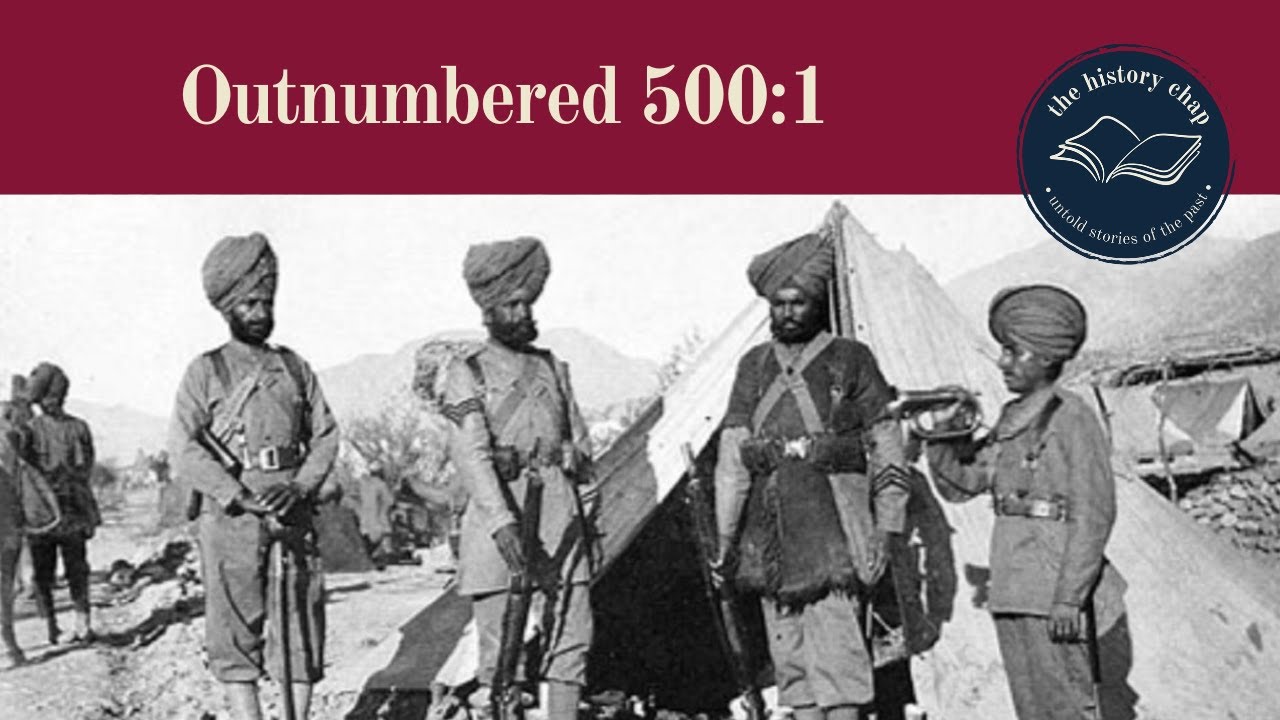 The British had established Fort Lockhart and Fort Gulistan on the Samana Range to oversee the region, but the rugged terrain between them prevented direct communication. To solve this problem, they built a small signaling post at Saragarhi, halfway between the two forts, equipped with a heliograph to relay messages. This post, never intended to be a defensible fortress, was a simple blockhouse with loopholed walls and a signaling tower.
Its garrison was a mere 21 men, a tiny force tasked with a crucial but unglamorous role in the military machinery of the Raj.
The rebellion had been brewing for weeks, with shots fired at Fort Lockhart and thousands of tribesmen surrounding Fort Gulistan. Colonel Haughton, commanding the 36th Sikhs, had twice sallied out from Fort Lockhart to relieve the pressure on Gulistan. But on the morning of September 12th, the tribesmen, their numbers swelled by fighters from across the Afghan border, turned their full attention to the vulnerable communication post at Saragarhi.
Havildar Ishar Singh, peering through his binoculars, saw columns of Pashtun warriors converging on his position, their battle standards fluttering in the wind like a medieval host.
Ishar Singh was a seasoned soldier, a man in his 40s who had joined the army at 18. Known for his rebellious streak and his fierce loyalty to his men, he was a complex character who often clashed with his officers but was deeply respected by those he led. As the enemy host paused before the tiny fort and demanded surrender, Ishar Singh consulted his men.
The choice was stark: surrender or face certain annihilation. The answer from the 21 Sikhs was unanimous. There would be no surrender.
 They would fight to the last man.
The heliograph operator, Sepoy Gurmukh Singh, a 19-year-old, sent a message to Fort Lockhart: “Enemy approaching main gate, need reinforcements.” Colonel Haughton could see the tribal standards from his position, estimating the enemy force at between 10,000 and 14,000 men. But he was unable to break through, with thousands of tribesmen massing between his fort and Saragarhi.
He signaled back that he could not break through, and the men at Saragarhi understood. They were on their own. Gurmukh Singh, from his position on the tower, would provide a running commentary of the battle, his messages becoming a testament to the bravery unfolding below.
The tribesmen launched their first assault, and Ishar Singh formed his men into two lines, opening fire at 250 meters. The . 303 caliber rifles, fired at close range, had a devastating effect, but the sheer weight of numbers was overwhelming.
Sepoy Bhagwan Singh was the first to be killed, his body carried back into the compound by a wounded comrade before the gate was slammed shut. The Pashtuns made two more determined efforts on the main gate, but both were beaten back by the disciplined fire of the Sikhs. The attackers then tried to scale the walls, leading to fierce hand-to-hand combat.
 By midday, the Sikhs had repelled seven attacks, but their numbers were dwindling. Gurmukh Singh signaled, “Low on ammo, need ammo urgently.” Colonel Haughton, in a desperate gamble, sent his personal orderly on a daring mission to sneak ammunition through the enemy lines, but the man was spotted and chased back to Fort Lockhart.
The situation at Saragarhi was becoming increasingly desperate. The tribesmen, frustrated by their inability to take the post, set fire to the bushes in front of the fort, creating a smoke screen to obscure their movements. Under this cover, they rushed forward and placed explosives at a corner of the wall that they had been trying to breach.
At around 3:30 PM, the explosion collapsed a corner of the outpost. The tribesmen prepared for a two-pronged attack on the main gate and the breach. From Fort Lockhart, the men of the 36th Sikhs watched in horror, sending a message: “Enemy approaching the breach.”
At that moment, the main gate finally gave way, and the Afghans swarmed into the fort. Havildar Ishar Singh, already severely wounded, ordered his remaining men to fall back into the courtyard while he covered them. Fixing his bayonet, he and two other Sikhs charged the advancing Pashtuns, their sudden and brave attack briefly forcing the enemy back before they were overwhelmed and disappeared into the mass of tribesmen.
Five Sikh soldiers, now in the courtyard, formed a circle and fought back to back with their bayonets, refusing to yield. Meanwhile, Gurmukh Singh, watching the final moments of his unit from the tower, sent his last signal: “Main gate breached, down to one, request permission to dismount and join the fight.” From Fort Lockhart came the reply: “Permission granted.”
 The young Sepoy bolted the door of the tower and, according to later accounts from Pashtun survivors, killed 20 attackers before the tribesmen set the tower ablaze. He was still firing and shouting defiance as he died in the flames.
The Battle of Saragarhi was over. The 21 Sikhs had held out for eight hours, inflicting heavy casualties on an enemy that outnumbered them by more than 500 to one. When the relief force arrived two days later, they found over 200 dead Afghan warriors lying around the post, with Pashtun leaders themselves claiming losses of about 180 killed and many more wounded.
The total figure of 450 killed or wounded means that each defender took out an average of 20 enemy warriors, a ratio far higher than other famous last stands like Rorke’s Drift or the Alamo. The stand had bought precious time for Fort Gulistan, which was able to hold out until a relief force of 2,000 men arrived and drove the tribesmen off the Samana Range.
When the relief force searched the burned-out remains of Saragarhi, they found the charred bodies of the defenders. Amidst the debris, they also discovered the heliograph, carefully packed away in its leather case. Even in his final moments, Gurmukh Singh had taken the time to secure his equipment, an act of professionalism and coolness that defies comprehension.
The story of Saragarhi, though a tactical defeat, became a legend of heroism and devotion to duty. When reports reached London, the British Parliament rose to pay its respects, a remarkable tribute to Indian soldiers in the height of the Victorian era.
All 21 defenders were posthumously awarded the Indian Order of Merit, the highest gallantry award available to Indian troops at the time. It was the only time that award was ever given to every man in a single battle. An obelisk was erected at Fort Lockhart in their memory, and three gurdwaras were built in their honor, one close to the Golden Temple in Amritsar.
The story has continued to inspire generations, with a Bollywood film released in 2019 and a statue of Havildar Ishar Singh unveiled in Wolverhampton, England, in 2021, a tribute to the enduring legacy of these 21 men who chose to fight against impossible odds rather than surrender. Their sacrifice remains a powerful symbol of courage, comradeship, and the unbreakable spirit of soldiers who stand by their duty and each other, even in the face of certain death.


