Hollywood knew exactly what it wanted Ida Lupino to be.
Beautiful.
Dangerous.
Troubled.
The seductive woman.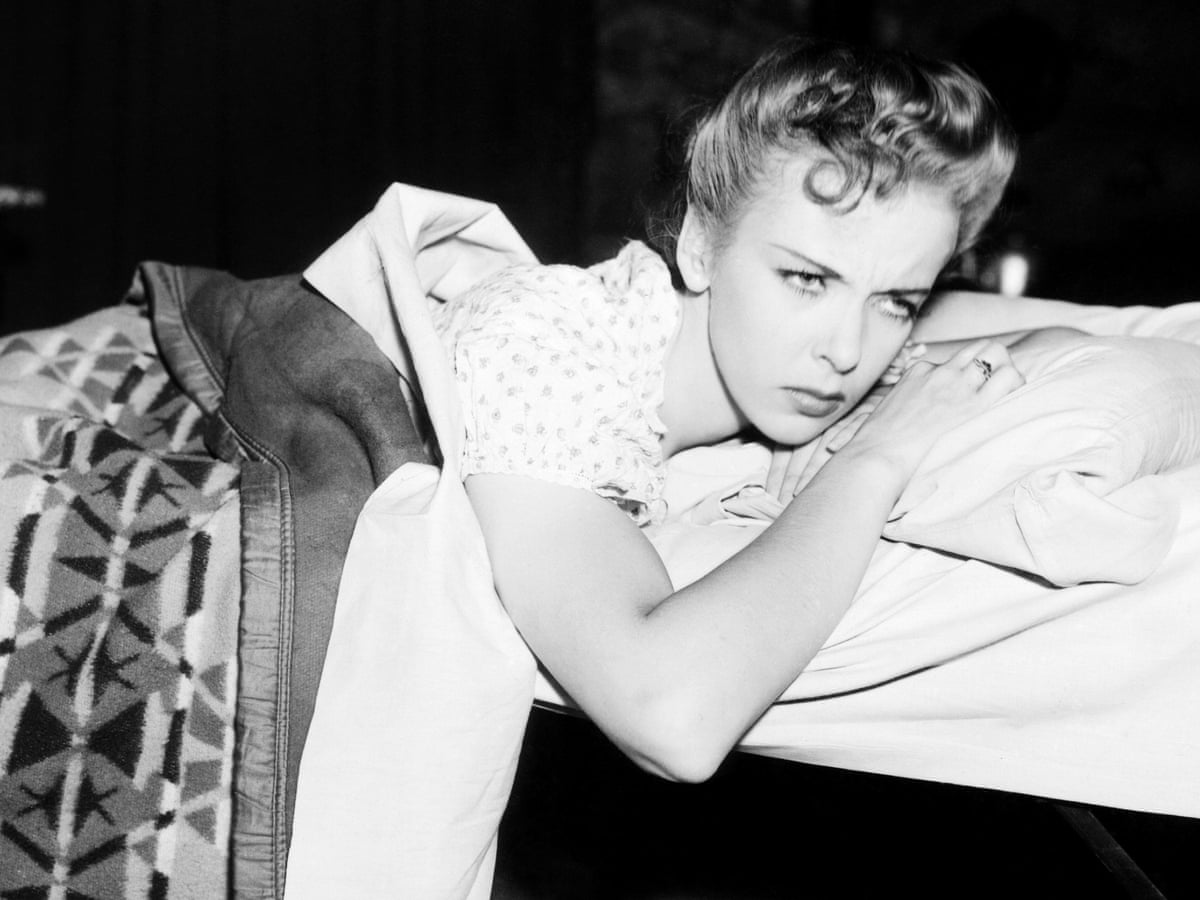
The “bad girl” audiences were supposed to fear and desire at the same time.
But Ida wanted something Hollywood was far less willing to give a woman.
Control.
So when the roles stopped satisfying her, she did something almost unheard of.
She stepped behind the camera.
And in an industry overwhelmingly controlled by men, Ida Lupino quietly became one of the most daring filmmakers of her generation.
Her story began thousands of miles from Hollywood.
Born in London into a theatrical dynasty, Lupino grew up surrounded by performers.
Acting was practically part of the family business.
By 17, she had arrived in Hollywood.
But the dream quickly came with a problem.
Studios looked at the young British actress and saw a type.
A beautiful troublemaker.
A seductive outsider.
A woman suited to playing “hussies” and dangerous girls.
Lupino wanted more.
Then her life was interrupted by something far more frightening than a disappointing role.
Polio.
The illness could have ended everything.
Instead, she recovered and returned to acting with an increasingly fierce determination to prove she was capable of more than Hollywood expected.
Leaving Paramount became another turning point.
Without the same studio restrictions, Lupino began finding darker and more demanding material.
The Light That Failed helped demonstrate her dramatic power.
Then came High Sierra opposite Humphrey Bogart.
The film gave Lupino the kind of gritty material she had been searching for.
She could be vulnerable without being weak.
Tough without becoming a caricature.
Suddenly, audiences were seeing something deeper.
But Lupino was also learning an uncomfortable truth.
An actress could give a brilliant performance and still have very little control over her career.
The studio chose the script.
The producer controlled the production.
The director made the decisions.
And when Lupino rejected roles she disliked, she could find herself suspended or sitting on the sidelines.
So she started watching.
While other actors relaxed between scenes, Lupino paid attention to the cameras.
The lighting.
The editing.
The way directors constructed a scene.
She later jokingly referred to herself as the “poor man’s Bette Davis.”
But behind the self-deprecation was serious ambition.
If Hollywood would not give her the stories she wanted as an actress, perhaps she could make them herself.
Lupino helped establish an independent production company, The Filmakers.
That decision changed everything.
Instead of competing for enormous studio productions, she embraced smaller budgets and controversial subjects.
The limitations became part of her strength.
Not Wanted tackled the subject of an unmarried pregnancy.
When the original director became unable to continue, Lupino stepped in to finish the film.
It became the beginning of something extraordinary.
She was directing.
And she discovered she was good at it.
Then came Outrage.
At a time when mainstream Hollywood rarely confronted sexual assault directly, Lupino built a film around its psychological aftermath.
She approached the subject not as cheap exploitation but through the trauma experienced by the woman at the center of the story.
It was difficult material.
That was exactly why Lupino wanted to confront it.
Her filmmaking grew increasingly confident.
Then she made The Hitch-Hiker.
A tense story about two men trapped by a murderous stranger, the film became one of the defining works of Lupino’s directorial career and an important entry in film noir.
There was another remarkable detail.
In the male-dominated American film industry of the 1950s, Ida Lupino stood almost alone as a woman directing feature films.
She had transformed herself.
Hollywood had tried to sell Ida Lupino as the dangerous woman in front of the camera.
Now she was the person deciding where the camera pointed.
But independence came with a price.
Her company struggled financially.
The market for small, socially conscious films was difficult.
Eventually, the feature-film directing opportunities slowed.
For many filmmakers, that might have been the end.
Lupino simply changed direction again.
Television was expanding rapidly.
It needed directors who could work quickly.
Efficiently.
Within tight budgets.
Those were exactly the skills Lupino had developed making independent films.
She went on to direct episodes across more than 30 television series.
Her credits reached into Westerns, crime dramas, comedies and science fiction.
One of the most fascinating connections came with The Twilight Zone.
Lupino had appeared as an actress on the series.
She later returned as a director.
It was a perfect symbol of her unusual career.
She could stand in front of the camera.
Then walk behind it and take control.
Her feature directing career eventually received one final major chapter with The Trouble with Angels.
Afterward, Lupino increasingly returned to character acting.
But Hollywood was changing.
So was she.
The woman who had spent decades refusing to fit comfortably inside the industry’s expectations gradually withdrew from the spotlight.
Her later years became increasingly private.
The once fiercely active actress, producer and director eventually lived a far more secluded life.
She died in 1995.
For years, many casual movie fans remembered Ida Lupino primarily as an actress.
But history has increasingly revealed something much bigger.
She was not simply another star whose career faded.
She was a filmmaker operating in a system that offered women almost no path to directing feature films.
She created her own path anyway.
She tackled pregnancy.
Sexual violence.
Murder.
Psychological trauma.
Social judgment.
Subjects safer filmmakers might have avoided.
And she did it without the enormous resources of the major studios.
Hollywood initially wanted Ida Lupino to play the bad girl.
The dangerous woman.
The victim.
The outsider.
But Lupino refused to remain trapped inside somebody else’s idea of who she should be.
Actress.
Producer.
Director.
Television pioneer.
Independent filmmaker.
Every time one door began closing, she found another way into the room.
Her Hollywood career may have suffered setbacks.
Her independent company may not have become an empire.
And her final years may have been far quieter than her extraordinary youth.
But Ida Lupino accomplished something more enduring than simply remaining famous.
She took control.
And in an era when Hollywood rarely allowed women to call the shots, Ida Lupino learned how to call them herself.