At 80, Pattie Boyd Finally Exposes the Dark Truth Behind Her Marriage to Eric Clapton
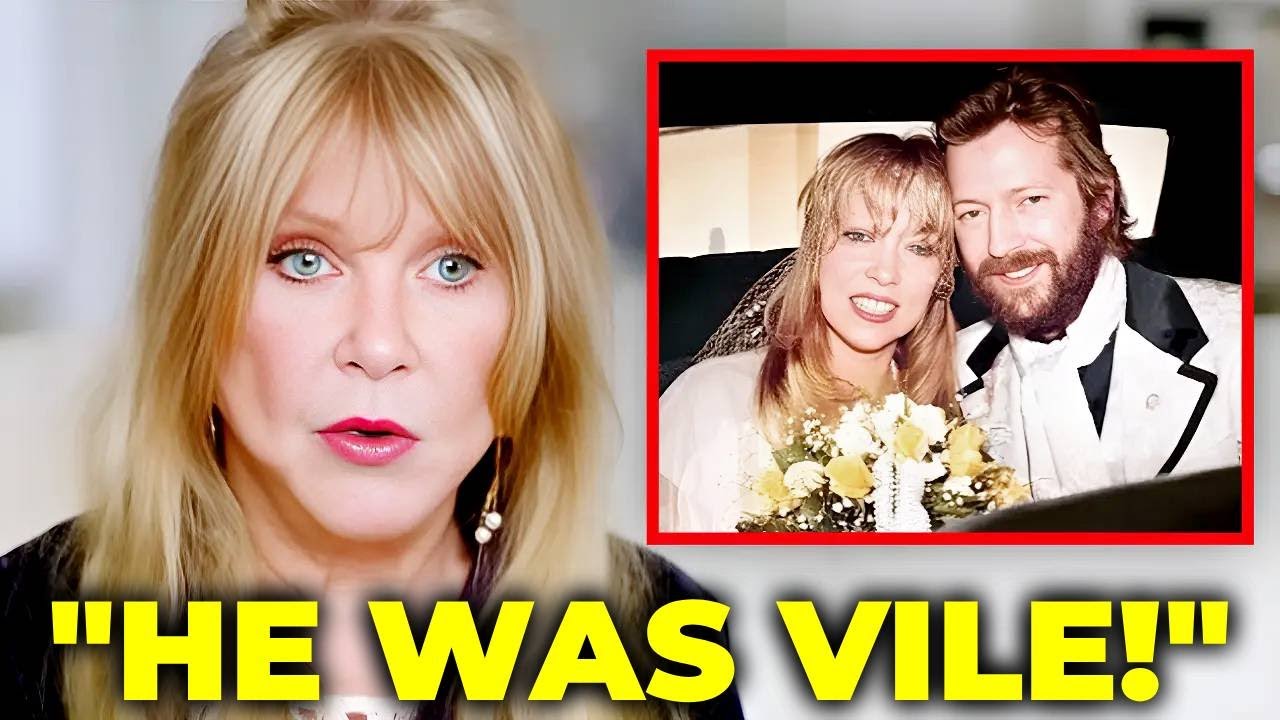
At eighty years old, Pattie Boyd has finally broken her silence on the harrowing realities of her marriage to Eric Clapton, a union long romanticized as the ultimate rock and roll love story. The iconic model and muse of the 1960s is now exposing the painful truth behind the fairy tale, leaving fans and admirers stunned by her candid revelations. The woman who once inspired some of the most celebrated love songs in music history—including “Layla” and “Wonderful Tonight”—has revealed that the reality of her life with the legendary guitarist was far from romantic. Instead, it was marked by betrayal, addiction, and profound emotional devastation that would take decades to overcome. Boyd’s revelations come at a time when she has fully reclaimed her own narrative. After years of being defined by her relationships with two of rock music’s most iconic figures, she is now speaking openly about the suffering that lurked beneath the surface of her seemingly glamorous life. Born Patricia Anne Boyd on March 17, 1944, in Taunton, Somerset, England, she rose to prominence as one of the most sought-after models of the Swinging Sixties. Her distinctive look—characterized by long hair, wide eyes, and an innate youthful charm—graced the covers of Vogue and other leading fashion publications, making her an icon of her generation. But her entry into the world of rock and roll would change her life forever. In 1964, during the filming of “A Hard Day’s Night,” Boyd met George Harrison, and their rapid romance culminated in marriage on January 21, 1966. At the heart of Beatlemania, Boyd’s life seemed like a dream come true. Yet the reality of her marriage to Harrison was fraught with challenges. His increasing devotion to Eastern spirituality created an emotional distance between them, while his infidelities—including a devastating affair with Maureen Starkey, the wife of Ringo Starr—eroded her trust and sense of self-worth. Boyd found herself trapped in the role of “the little wife sitting at home,” unfulfilled and isolated. The breaking point came when she discovered Harrison’s affair with Starkey, finding her at their home lying on a mattress while Harrison dismissed her presence with indifference. It was a humiliation Boyd would never forget, forcing her into painful introspection about her own worth. Amidst the turmoil of her marriage to Harrison, another figure had entered the scene: Eric Clapton. Clapton, a close friend and creative collaborator of Harrison, had become obsessed with Boyd, and his pursuit would set the stage for one of rock music’s most complicated and destructive love triangles. Clapton’s obsession with Boyd was so intense that it bled into his music. The iconic song “Layla” was inspired by his unrequited love for her, and “Wonderful Tonight” captured moments they shared together. But the romance that Boyd eventually entered into with Clapton would prove to be even more devastating than her marriage to Harrison. Before his relationship with Boyd took hold, Clapton’s personal life was already marked by chaos. His relationship with Alice Ormsby Gore was dominated by substance abuse, with both partners succumbing to heroin addiction. Clapton himself later admitted that their life together was defined by dependency and instability rather than genuine love. Even more complicated was Clapton’s brief relationship with Boyd’s younger sister, Paula. After meeting at a concert in Liverpool in December 1969, Clapton became involved with Paula, but his heart remained fixated on Pattie. Paula would later discover that “Layla” was inspired by her sister, a painful realization that eroded her self-esteem and led to the end of their relationship. This entanglement highlighted the deeply interwoven and destructive nature of the relationships within this circle of rock royalty. When Boyd finally separated from Harrison in 1974 and divorced in 1977, she began a relationship with Clapton. They married on March 27, 1979, in Tucson, Arizona. The wedding was notable for Harrison’s presence, who humorously referred to himself as their “husband-in-law,” suggesting a level of camaraderie that belied the complicated history between them. But the marriage that followed was far from the passionate romance that had been imagined. Clapton’s struggles with alcoholism and substance abuse took a severe toll on their relationship, causing Boyd considerable emotional distress. She would later reflect on the difficulty of maintaining any semblance of stability in their lives together. Perhaps most devastating was the couple’s struggle to have children. Clapton had long expressed a desire to have a family with Boyd, and they underwent multiple attempts at in-vitro fertilization. Each failed attempt deepened Boyd’s sense of loss and frustration. The emotional toll of these unsuccessful procedures, combined with Clapton’s personal struggles, placed an unbearable strain on their marriage. Boyd has described the IVF process as emotionally taxing, with each failed attempt deepening her sense of loss. But the true devastation came in 1985 when Boyd discovered Clapton’s infidelities. She learned that Clapton had fathered a daughter named Ruth with another woman. In 1986, he fathered a son named Connor with Lori Del Santo. Boyd was informed about Connor’s existence while she was still married to Clapton, a revelation that she described as a “stab in the heart.” The timing of these discoveries made the betrayal even more painful. Boyd had been enduring the emotional and physical toll of IVF treatments, dreaming of building a family with Clapton, all while he was seeking fulfillment outside of their marriage. The revelation shattered her and deepened her emotional wounds, leading her to question her very self-worth. Following their divorce in 1989, Boyd found herself grappling with a profound crisis of identity. She later reflected, “I was no longer Mrs. Famous George or Mrs. Famous Eric, so who am I? I am no one.” These words captured the depth of her loss and the extent to which she had been defined by her relationships with famous musicians. The aftermath of her marriages forced Boyd to confront the painful reality of her life. She sought therapy to process the emotional pain from both marriages and to reclaim her sense of self. As part of her healing process, she turned to photography and writing, creative outlets that allowed her to rediscover her identity outside the confines of her associations with iconic musicians. Boyd’s photography, which she had begun exploring during her years in the rock and roll world, eventually gained international recognition. Her exhibitions around the world helped establish her as an artist in her own right, offering intimate glimpses into the lives of the musicians and cultural figures she had known. In 2007, Boyd published her autobiography, “Wonderful Tonight: George Harrison, Eric Clapton, and Me,” which became an international bestseller. The book provided a candid look into her personal life and professional journey. Through her memoir, Boyd reclaimed her voice and her identity, moving beyond the narratives that had long defined her life and career. It was a powerful act of self-assertion from a woman who had been objectified and idealized for decades, often at the expense of her own happiness. The revelations about her marriage to Clapton are particularly significant because they challenge the enduring myth of the romantic rock and roll muse. Boyd’s story is not one of glamour and romance, but of survival—a woman who endured betrayal, addiction, and emotional devastation, and who emerged with her dignity intact. At eighty years old, Pattie Boyd is no longer willing to let the world romanticize her suffering. Her candid revelations about Eric Clapton serve as a powerful reminder that the fairy tale narratives we construct around celebrities often obscure the painful realities of their lives. Boyd’s legacy extends far beyond her status as a muse to famous musicians. She is a cultural icon who represented the freedom and individuality of the 1960s, a fashion pioneer whose influence continues to resonate across generations. Mary Quant herself once suggested that women should aspire to look like Boyd, a testament to her enduring impact on style and beauty. But her most important legacy may be her courage in speaking her truth. At an age when many might choose to remain silent, Boyd has chosen to shed light on the darker aspects of her life, giving voice to the pain that was hidden behind the facade of rock and roll glamour. The story of Pattie Boyd and Eric Clapton is a cautionary tale about the dangers of romanticizing toxic relationships. Clapton’s obsession with Boyd was never truly love—it was possession, fueled by addiction and an inability to find fulfillment within himself. Boyd, caught in the orbit of two brilliant but deeply flawed men, paid the price for their emotional immaturity. As she looks back on her life, Boyd’s revelations serve as a reminder that the truth is often far more complex and painful than the stories we tell ourselves. Her willingness to share her experiences, even at eighty years old, demonstrates a remarkable strength and a commitment to authenticity that is truly inspiring. The world may remember Pattie Boyd as the woman who inspired “Layla” and “Something,” but her own story is far more significant. It is a story of survival, healing, and ultimately, of reclaiming one’s identity in the face of overwhelming odds. Her photographic work and memoir have cemented her status as an artist and author in her own right, distinct from the men who once defined her public persona. She has transformed her pain into purpose, using her experiences to illuminate the hidden costs of fame and the importance of self-worth. For fans who grew up idolizing the romanticized image of Clapton and Boyd, these revelations are a sobering correction. The reality of their marriage was a cycle of addiction, betrayal, and emotional exhaustion, far removed from the tender lyrics of the songs Clapton wrote for her. Boyd’s decision to speak out now, at eighty, is a powerful statement. She is no longer the young model swept up by the charisma of rock stars. She is a survivor who has come to understand that the greatest love story she could ever be part of is the one she has with herself.

3 August 2026

Bob Denver Lived a Life Far Different From Gilligan — The Untold Story Behind the Man Who Made America Laugh

For millions of television viewers, Bob Denver will always be remembered as Gilligan, the lovable first mate whose clumsy mistakes and innocent personality became the heart of one of television’s most recognizable sitcoms. With his red shirt, famous white hat, and unforgettable expressions, Gilligan brought laughter to generations of families who gathered around their televisions … Read more

3 August 2026

At 74, Parker Stevenson First time Breaks His Silence After Kirstie Alley’s Death

  LOS ANGELES — Parker Stevenson has finally broken his silence after more than a decade of quiet, and the words he chose carry the weight of a lifetime shared with Kirstie Alley. At 74, the former teen heartthrob stepped back into the public eye to honor the woman who changed his life forever.   His tribute came through a single photograph posted to social media, showing Alley holding his shirt at the 1988 premiere of “Shoot to Kill.” Beside the image, he wrote words that stunned fans and reignited interest in a love story that many thought had ended long ago.     “Dear Kirsty, I am so grateful for our years together and for the two incredibly beautiful children and now grandchildren that we have,” he wrote. “You will be missed with love, Parker.”     Those words marked the first time Stevenson had publicly addressed Alley since her death on December 5th, 2022. She was 71 years old and had been battling cancer that her family said was only recently discovered before her passing.     True and Lily, the couple’s two adopted children, announced their mother’s death with a statement that called her “an incredible, fierce, and loving mother.” They said she was surrounded by close family and praised her joy for life, her children, grandchildren, animals, and creative work.     The news sent shockwaves through Hollywood. John Travolta called their bond one of the most special relationships of his life. Ted Danson remembered how easily she made him laugh. Rhea Perlman spoke about Kirsty’s limitless joy and the elaborate treasure hunts she created for their children.     But it was Stevenson’s quiet tribute that pulled buried history back into the light. The couple’s story began in 1981, when Alley saw Stevenson across a Los Angeles bar and told her roommate she would give anything to be with him.     There was one obvious problem. Stevenson had arrived with someone else. Alley walked over anyway, and her confidence worked. They danced that night, and by the time they left, they were drawn closely together.     Their differences appeared almost immediately. Alley loved rap music, vegetables, cigarettes, and Scientology. Stevenson preferred classical music, sugar, a smoke-free room, and his Episcopalian faith. She was loud, quick, and impossible to miss. He was careful, calm, and happier outside the center of attention.     Stevenson later called them exact opposites. At first, that contrast created excitement. Each seemed to offer what the other lacked. Their politics, habits, beliefs, and basic ways of living rarely matched, but the attraction was strong enough to overcome everything.     Before he met Alley, Stevenson had already tasted fame beyond anything he expected. Born June 4th, 1952, in Philadelphia, he was one of two sons born to Richard Stevenson Parker Sr. and Sarah Meade. His mother was an actress who appeared on Broadway and in television commercials.     When Parker was only five, Sarah took him to a filming session. That visit led to two small television appearances, giving him an early look at the world that would later shape his life. His father did not welcome that direction and made it clear he did not see acting as a serious career.       Parker’s real interest was architecture. He liked structure, design, and the idea of creating something that could last. That plan followed him to Princeton University, where he studied architecture. Acting remained more of a useful side job than a calling.     In 1972, acting moved to the front when he received his first notable screen role in “A Separate Peace.” He was credited as Parker Stevenson, the name audiences would soon know. Yet even then, he was not certain that Hollywood was where he belonged.       In 1977, he was cast as Frank Hardy in “The Hardy Boys/Nancy Drew Mysteries.” Shaun Cassidy played his younger brother Joe, while Pamela Sue Martin played Nancy Drew. Frank was the calmer and steadier brother, which suited Parker’s natural screen presence.       The show became a massive hit and turned both young actors into national heartthrobs overnight. Their faces appeared on posters, lunchboxes, and magazines. Parker later called the experience very surreal, recalling a visit to the King Tut exhibit where people stared at him instead of the famous treasures. … Read more

3 August 2026

🎬❤️ Why Leah Remini Says Kevin James “Ruined Her for Life” — The Truth Behind One of Television’s Greatest Partnerships

For millions of viewers, Leah Remini and Kevin James were the heart of The King of Queens. As Doug and Carrie Heffernan, they played a married couple whose constant arguments, sarcastic humor, and everyday struggles created one of television’s most beloved sitcom relationships. Their characters disagreed about almost everything. Money. Family. Friends. Household responsibilities. But somehow, … Read more

3 August 2026

Johnny Carson’s Widow FINALLY Breaks Her Silence After His Death

  For decades, Alexis Carson guarded the darkest truths of America’s most beloved late-night host with an impenetrable wall of silence. Now, years after Johnny Carson’s death, the woman who stood beside him until his final breath has finally broken her silence — and the revelations are shaking the foundation of his carefully crafted public image.   The woman who married Johnny Carson in 1987 has spoken candidly about the man behind the famous smile, exposing a private world far darker than the polished television persona that made him a household name. Behind the laughter that filled American living rooms for three decades lay a life scarred by broken marriages, private pain, family tragedy, bitter feuds, and secrets he carried to his grave.     Carson ruled late-night television for 30 years, becoming one of the most trusted and beloved figures in American entertainment history. But away from the cameras, those closest to him witnessed a completely different man — one whose temper could erupt without warning, whose drinking could transform him into someone unrecognizable, and whose relationships were far more complicated than audiences ever knew.     The full scope of Carson’s private struggles has now come into focus through the testimony of the woman who knew him best in his final years. What emerges is a portrait of a genius performer who controlled every second of airtime with precision, yet struggled to control the demons that haunted his personal life.     Born John William Carson on October 23rd, 1925, in Corning, Iowa, the future king of late night grew up in Norfolk, Nebraska, where he discovered his gift for entertaining at just 12 years old. A book about magic found at a friend’s house sparked an obsession that would define his life’s trajectory.     Young Johnny ordered a magician’s kit through the mail and began practicing card tricks on anyone who would stand still long enough. His mother made him a cape, and by age 14, he was performing as “The Great Carson” before local civic clubs, earning three dollars per show — a humble beginning for a boy who had already discovered the intoxicating power of holding a room’s attention.     The polished host America would eventually adore did not emerge overnight. He was a boy who repeated tricks until they worked, who practiced his confidence until it became second nature. That careful construction of persona would serve him throughout his career — and would also teach him to hide his true self behind timing, charm, and a smile that revealed nothing.       But before fame tested his privacy and relationships, Carson faced a far more serious trial. He joined the United States Navy in June 1943, entering officer training through the V-12 program. Assigned to the USS Pennsylvania in the Pacific, he arrived on August 14th, 1945 — the very day Japan announced its surrender.       His most harrowing duty came when the ship entered dry dock in Guam. Carson was assigned to damage control and given the terrible responsibility of supervising the removal of bodies and belongings of 20 servicemen who had been trapped below deck for 18 days following a torpedo bomber crash. He later called it “an awful experience” and “a terrible job.”       Even amid the horrors of war, entertainment never left him. He later recounted the high point of his Navy years: performing a card trick for Secretary of the Navy James Forrestal, who had asked about his postwar plans. That moment reminded Carson that his true strength lay not in the tricks themselves, but in his ability to hold attention — a skill that would carry him to the summit of American television.       After the Navy, Carson attended the University of Nebraska on education benefits, graduating in 1949 with a degree in radio and speech. His college thesis, “How to Write Comedy for Radio,” demonstrated an early and analytical understanding of what made audiences laugh — a knowledge he would refine and weaponize throughout his career.     That same year marked the beginning of his complicated personal life. On October 3rd, 1949, he married Joan “Jodi” Walcott, whom he had met at university. The couple had three sons: Christopher in 1950, Richard “Ricky” in 1951, and Corey in 1953. From the outside, the family appeared settled and happy — but pressure was already building.     Carson’s broadcasting career began in Omaha, where he hosted “The Squirrel’s Nest” on WOW radio and television. His playful routines, including mock interviews with pigeons on the courthouse roof, showcased the style that would later make him famous: calm on the surface while quietly making someone look foolish.   A fortuitous connection launched him to Los Angeles in 1951. The wife of a politician he had mocked on air owned stock in a Los Angeles radio station and referred him to her brother, who had influence in the growing television business. Carson joined KNXT and created “Carson’s Cellar,” a low-budget comedy program that caught the attention of comic Red Skelton.       When Skelton knocked himself unconscious during rehearsal just one hour before a live broadcast in 1954, Carson stepped in and hosted the show without collapsing under pressure. That performance proved he could walk onto any stage with no warning and keep the program moving — a skill that would define his legendary career.     Jack Benny, whose style strongly influenced Carson, predicted the young comedian’s success. But the path was not smooth. A prime-time variety show failed from 1955 to 1956, leaving Carson uncertain of his next move. He found his footing hosting ABC’s “Who Do You Trust?” from 1957 to 1962, where he met announcer Ed McMahon, who would become his trusted sidekick for decades.     When NBC sought a replacement for Jack Paar on “The Tonight Show” in 1962, Carson initially refused. The show’s immense success under Paar — and the pressure of its expansion to 105 minutes — made Carson doubt his ability to keep it fresh. But NBC persisted, and on October 1st, 1962, he took over. … Read more

3 August 2026

Lindsey Graham’s Sister Confirms Why He Never Married… The Rumors Were True

WASHINGTON — The question shadowed Lindsey Graham through nearly every public appearance of his five-decade career. Why did one of America’s most prominent senators never marry? After his sudden death last week at 71, his younger sister finally provided the answer, and it had nothing to do with the rumors that circulated for years. Darlene Graham Nordone, the sister Graham legally adopted after their parents died within 15 months of each other, revealed that her brother made her a promise when she was just 11 years old. He told her he would take care of her. And according to Nordone, he never broke that promise. The revelation came as the nation continued to process the sudden death of the South Carolina Republican on July 11, 2026. His office initially described the cause as a brief and sudden illness, but later reports indicated a torn aorta linked to hardened arteries, a condition that can develop silently and strike without warning. Graham had been active in public life until the very end. He had recently returned from an overseas trip and was expected to resume his demanding Senate schedule. His death sent shockwaves through Washington, where he had served since 2002 after four years in the House and two years in the South Carolina legislature. Tributes poured in from across the political spectrum. Republicans highlighted his military service and legislative career. Democrats who had partnered with him on immigration reform and other bipartisan efforts noted his willingness to cross the aisle, even when they disagreed sharply on policy. The McCain family, whose patriarch John McCain was Graham’s closest friend in the Senate, offered some of the most emotional remembrances. Meghan McCain described Graham as family, noting that he had remained a constant presence in their lives even after Senator McCain’s death in 2018. But it was Nordone’s explanation that reframed everything the public thought it knew about Graham’s personal life. The story she told began long before Graham ever entered politics, in a small South Carolina town called Central, where the family ran a local business called the Sanitary Cafe. Graham’s parents, Millie and Florence James Graham, owned the establishment, which included a restaurant, bar, pool hall, and liquor store. The family lived in rooms behind the business before moving into a small house next door. Young Lindsey learned early that everyone had to contribute. He helped serve customers, clean up, and handle small jobs around the establishment. Those lessons in responsibility and hard work defined his entire life. He also became the first person in his family to attend college, enrolling at the University of South Carolina with no particular political ambitions. Everything changed in 1976. His mother died after a battle with Hodgkin lymphoma. Just 15 months later, his father died suddenly from a heart attack. Graham was 20 years old. His sister Darlene was 11. Both parents gone in barely more than a year. Graham faced an impossible choice. Relatives offered to take Darlene in. But rather than allow his grieving sister to be sent away, he decided to raise her himself. He was still finishing college, but he accepted the responsibility without hesitation. To ensure Darlene would receive proper care and benefits, Graham legally adopted his own sister. The decision allowed her to qualify for military family benefits, including health care. It also reflected what had already become true in every practical sense: he was no longer just her brother. He was her parent. The years that followed were demanding. Graham completed his undergraduate studies and enrolled in law school at the University of South Carolina. At the same time, he began pursuing a career in the Air Force Judge Advocate General’s Corps, the JAG Corps, where he would serve for a total of 33 years. He entered active duty in 1982 and served in several assignments, including a posting at Rhein Air Base in Germany. Even while stationed thousands of miles away, he remained deeply involved in Darlene’s life. He returned home whenever possible, checked on her schooling, and made the decisions any parent would make. Friends and family members later said Darlene never lacked guidance or attention during those years. Graham’s commitment to his sister never wavered, even as his military and legal careers demanded increasing amounts of his time. This is the context that explains why Graham’s personal life looked so different from that of other men his age. While his contemporaries were dating, marrying, and starting families, Graham was raising a younger sister while building a military career. There was little room left for serious relationships. The pattern continued as Graham entered politics. He served as an assistant attorney for Oconee County and city attorney for Central before winning a seat in the South Carolina House of Representatives in 1992. Two years later, he was elected to the U. S. House. In 2002, he won a Senate seat. As his political star rose, public fascination with his bachelor status grew. Washington is a city where politicians routinely appear with spouses and children. Graham stood out as a lifelong bachelor, and the questions never stopped. Reporters asked him about it constantly. During his brief 2015-2016 presidential campaign, one question followed him everywhere: If he became president, who would serve as first lady? Graham handled it with characteristic humor, laughing off questions rather than becoming defensive. His friend John McCain offered occasional glimpses. McCain recalled that Graham dated attractive women over the years and seemed to enjoy companionship, but never came close to marriage. Those comments only deepened public curiosity. The lack of clear answers allowed speculation to flourish. Rumors spread through political circles, news outlets, and social media. Some claimed he was too devoted to his career. Others invented stories with no evidentiary support. Graham never bothered to correct most of them. He seemed to believe that responding to every rumor would only amplify attention. Instead, he focused on legislation, military affairs, judicial confirmations, and international conflict zones. He traveled regularly to Iraq and Afghanistan, and later made multiple trips to Ukraine after Russia’s invasion. His career also underwent a notable political evolution. In 2016, he was one of Donald Trump’s toughest critics, calling him a race-baiting bigot. Trump responded by revealing Graham’s personal cell phone number at a rally. Yet following John McCain’s death in 2018, Graham gradually became one of Trump’s closest allies in the Senate. Throughout all of it, the personal question remained. Why had this influential, successful man never married? The answer, Nordone explained, had been there all along. Graham had made a promise to his sister when she was a grieving child, and he regarded that promise as a sacred commitment. According to Darlene, her brother chose to build his life around the responsibility of raising her instead of building a family of his own. That decision, made when he was barely out of his teens, shaped everything that followed. It was not a scandal. It was not a hidden relationship. It was a quiet, decades-long act of devotion. The explanation resonated deeply with people who had watched Graham’s career unfold. The man who seemed so consumed by politics and national security had been motivated, at least in part, by a promise made to an 11-year-old girl in the wake of unimaginable tragedy. Nordone’s account also corrected a narrative that had followed her brother for years. The rumors that circulated about Graham’s personal life were never supported by evidence. The truth was far more ordinary and far more moving than any of the speculation. Graham died without a spouse or children of his own. But he leaves behind a sister who credits him with giving her a stable, loving upbringing after they lost both parents. In that sense, his legacy extends beyond legislation and military service to a deeply personal commitment that spanned more than five decades. Colleagues noted that Graham rarely spoke about the sacrifice. He did not seek recognition for raising his sister, nor did he use the story to bolster his political image. It was simply something he did because it needed to be done. As Washington mourns one of its most colorful and consequential figures, the final chapter of Graham’s story offers a different lens through which to view his life. The man who seemed to have everything, power, influence, and respect, had made a different choice about what mattered most. The promise he made to Darlene was kept until the end. And in her telling, that promise explains everything the public spent decades wondering about. The rumors were indeed true, but not in the way anyone imagined. The truth was a brother’s love and a vow that shaped an extraordinary life.

2 August 2026

At 70, Jerry Hall Reveals The Ugly Details Of Her Mick Jagger Affair

For more than two decades, Jerry Hall was the woman standing beside one of rock’s most magnetic and unpredictable figures. Now, at 70, the former supermodel has finally stripped away the glamour to expose the ugly mechanics of her relationship with Rolling Stones frontman Mick Jagger — a bond built on betrayal, legal illusion, and a tolerance she says she learned in a childhood marked by violence. Speaking candidly in a series of reflective interviews, Hall has detailed the moments that shattered her, from the dinner party where Jagger first pressed his knee against hers while she was engaged to another man, to the crushing courtroom ruling that declared her wedding a legal nullity. The revelations paint a portrait of a woman who endured decades of humiliation while raising four children with a man she now describes as an “incurable womanizer.” The roots of that endurance, Hall now admits, stretch deep into her Texas childhood. Born in 1956 in Gonzales, she grew up in a household dominated by her father’s rage — a World War II veteran suffering from severe PTSD and anger issues that frequently turned physical. She learned to walk on eggshells, and that hypervigilance followed her into adulthood, conditioning her to accept treatment she says she never should have tolerated. Her escape came at 17, when she used an $800 insurance settlement from a car accident to buy a one-way ticket to Paris. Within four years, she had conquered the global fashion industry, gracing more than 40 international magazine covers, including Vogue and Cosmopolitan, and becoming the face of Yves Saint Laurent’s groundbreaking Opium perfume. But professional triumph masked a personal vulnerability that would soon be exploited. By 1975, Hall was engaged to Roxy Music frontman Bryan Ferry, a sophisticated but intensely possessive partner who struggled with her independence. That summer, the couple attended a dinner party hosted by Jagger, then married to Bianca. The seating arrangement was deliberate — Jagger placed himself beside Hall, and she felt an electric connection as he pressed his knee to hers, right in front of her unsuspecting fiance. The affair that followed was conducted in the shadows of underground jazz clubs in Harlem, low-profile bars in Tokyo, and Coney Island hot dog stands. At 70, Hall recalls the secrecy as both thrilling and corrosive, a constant game of evasion in which Jagger would cover his famous mouth with his hands to avoid recognition. In 1977, she broke off her engagement to Ferry, and Jagger separated from Bianca. Early in their relationship, Hall delivered a strict ultimatum: Jagger had to quit his heavy illicit substance use. He complied, but she soon discovered the addiction had simply shifted. His new compulsion was compulsive womanizing, a pattern that would define their entire relationship and leave Hall in a permanent cycle of hope, discovery, and devastating disappointment. The couple welcomed their first daughter, Elizabeth Scarlett, in 1984, followed by son James in 1985. The arrival of children gave Hall purpose, but it also trapped her in an impossible dynamic — maintaining a stable home while dealing with the fallout of Jagger’s constant betrayals. She admits she stayed far too long, driven by love, insecurity, and the desperate hope that parenthood would finally ground him. That hope was shattered in 1992. Within 24 hours of giving birth to their third child, Georgia May, Jagger flew to Thailand for a secret holiday with model Carla Bruni. The betrayal was discovered through intercepted messages, and Hall announced a separation. But Jagger’s charm, his promises of fidelity, and his insistence that he would change, pulled her back within weeks. The cycle promptly repeated. By 1995, Hall had reached her limit with denials and hired a private detective to track Jagger’s movements through London’s nightclub scene. The investigator returned with definitive proof of ongoing infidelity, giving Hall the leverage she needed. But a legal separation was delayed when she became pregnant with their fourth child, Gabriel Luke, in late 1996, leading her to give the relationship one final chance for the sake of the family. The most profound twist came years earlier, on November 21, 1990, when the couple held an elaborate, six-hour Hindu wedding ceremony in Bali, Indonesia. To Hall, it was a sacred union — the moment she finally became Jagger’s wife. She wore traditional Balinese attire, surrounded by family and friends, convinced that the ceremony would solidify their bond and end her insecurities. She had no idea of the legal fragility beneath her feet. That fragility was exposed in 1999, after Brazilian model Luciana Gimenez came forward with proof she was pregnant with Jagger’s child. DNA testing confirmed paternity of Lucas Maurice Morad Jagger, born in May 1999. The revelation was a line Hall could no longer cross — it struck at the heart of her identity as a mother. She filed for divorce in London, believing she was entitled to a fair share of their 22-year partnership. Jagger’s legal team responded with a devastating defense: the couple had never been legally married. On July 9, 1999, the UK High Court agreed, ruling that the Balinese ceremony was void because it had never been registered with Indonesian authorities and no proper civil marriage licenses were filed. Hall’s years of devotion were reduced to a legal footnote — she was declared an “unmarried partner” with no statutory claim to the Rolling Stones fortune. She was forced to accept a multi-million dollar out-of-court settlement, a fraction of what she would have received had the marriage been legally recognized. The ruling was a final humiliation, stripping her of the validation she believed she had rightfully earned. Hall later reflected that she possessed “the patience of a saint,” but that patience was rewarded with a courtroom declaration that her wedding had meant nothing. In a 2003 Radio Times interview, Hall connected that tolerance directly to her upbringing, admitting that she was “raised not to know what it’s like to be treated well.” The acknowledgment was a moment of profound self-awareness — a recognition that the patterns of her abusive childhood had silently dictated the choices she made as an adult, keeping her tethered to a man incapable of fidelity. After the split, Hall refused to be defined by the wreckage. She reinvented herself on the London stage, breaking box office records in 2000 with her performance as Mrs. Robinson in The Graduate. She launched a VH1 reality series in 2005, and in 2016, she married billionaire media mogul Rupert Murdoch. That union lasted six years, ending abruptly when Murdoch sent a breakup email in June 2022. Now, at 70, Hall speaks with striking clarity about her past. She tells British Vogue she has no active resentment toward Jagger, though she insists she had no interest in spending her old age with him. What she wants instead is a functional family — and she has achieved it in the most unexpected way. Every Sunday, she hosts lunch at her London home. The guest list is a testament to how far they have come: Jagger, his long-term fiancee Melanie Hamrick, and their young son Deveraux regularly join Hall and her extended family. She describes the arrangement as “odd but fully operational,” crediting Jagger’s evolution into a “great diplomat” in his later years. He now keeps the peace across his sprawling family tree with an ease that eluded him for decades. Hall says she values Jagger as a co-parent and as a grandfather to her children’s offspring, a role he has embraced. She emphasizes that the bitterness has faded, replaced by a pragmatic acceptance of the complicated legacy they built together. The Sunday lunches offer the kind of stable, affectionate family dynamic she never experienced as a child — a quiet triumph over the chaos that defined her early life. Her broader message at 70 is one of hard-won independence. She no longer measures herself by the men she partnered with, but by the life she has constructed on her own terms. Her intelligence — she holds a verified IQ of 146 — and her resilience have carried her through a career that spans modeling, acting, and writing, and she shows no signs of slowing down. The ugly details of her Jagger affair are now public, but Hall presents them not as scars, but as lessons. She acknowledges the relationship taught her what she could endure, and more importantly, what she should never have to endure. Her journey from a violent Texas household to the heights of global fame, and through the wreckage of a love story that was never legally real, is a study in survival. At 70, Jerry Hall stands as a woman who has finally stopped tolerating the intolerable. The revelations of her affair with Jagger — the secret rendezvous, the betrayals in hospital maternity wards, the humiliating legal ruling — are no longer sources of shame. They are the raw material of a life fully examined, and a warning about the cost of loving a man who could never be faithful.

2 August 2026

An Weihnachten höhnte mein Bruder: „Lebst du noch vom Müll?“ – bis die Forbes-Eilmeldung kam

# “Niemand würde dich vermissen”: Ein einziger Satz beim Thanksgiving-Dinner sprengt eine Familie – und 24 Stunden später ist alles anders Als Friederike Berger (32) am Thanksgiving-Abend den Spott ihres Bruders über sich ergehen lassen muss, ahnt niemand in der Runde, dass dieser Moment das Ende einer scheinbar heilen Familie bedeutet. Innerhalb von 24 Stunden kippt das Leben aller Beteiligten vollständig – und die junge Softwareentwicklerin zeigt ihrer Familie, was es heißt, sie jahrzehntelang übersehen zu haben. Die Szene wirkt zunächst wie aus einem schlechten Film: Der Tisch biegt sich unter den Speisen, 30 Gäste haben sich versammelt, der Wein fließt. Friederike Berger hat alles bezahlt, stundenlang in der Küche gestanden, den Truthahn tranchiert, die Teller gefüllt. Doch als ihr Bruder Lukas (25) sein Glas hebt und ruft: “Wenn du von dieser Welt verschwinden würdest, würde es keinen interessieren”, da lacht die ganze Familie. Die Eltern stimmen ein, die Mutter fügt sogar hinzu: “Er hat recht. Nimm es nicht persönlich.” Was an diesem Abend im alten Familienhaus am Arkansas River beginnt, ist der Schlusspunkt einer jahrzehntelangen Geschichte der Vernachlässigung, der finanziellen Ausbeutung und der stillen Wut einer Frau, die von ihrer eigenen Familie systematisch übersehen wurde. “Ich stellte mein Weinglas ab und sagte nur: ‘In Ordnung’”, schildert Friederike heute. “Dann stand ich auf, griff meine Schlüssel und verließ das Haus. Kein Drama, keine Tränen. In diesem Moment wusste ich: Alles, was jetzt kommt, habe ich jahrelang vorbereitet.” Die Vorgeschichte liest sich wie ein Lehrstück über familiale Ungleichbehandlung. Friederike kam als ältestes Kind zur Welt, pflichtbewusst, leise, unauffällig. Ihr Bruder Lukas folgte nach Komplikationen bei der Geburt und wurde von den Eltern von Anfang an wie rohes Ei behandelt. “Meine eigene Kindheit war geprägt von einem einzigen Muster: Lukas bekam alles, ich bekam den Rest”, erinnert sich die 32-Jährige im Gespräch. Die Bevorzugung war allgegenwärtig. Stürzte Lukas als Kleinkind hin, rannten beide Elternteile herbei, trösteten, verwöhnten ihn mit Eiscreme. Blutete Friederikes Ellenbogen nach einem Sturz, den sie sich bei dem Versuch zugezogen hatte, das Spielzeug ihres Bruders zu holen, blieb die Wunde unbeachtet. Geburtstage wurden zu Symbolen der Ungleichheit: Neun Luftballons und ein Zauberer für Lukas, ein einfacher Kuchen und ein Buch für Friederike. “Er ist klein, du verstehst das”, entschuldigte der Vater die offensichtliche Ungerechtigkeit. Während Friederike perfekte Schulnoten nach Hause brachte und dafür nur ein flüchtiges “Gut” erhielt, wurden die Kritzeleien des Bruders als “künstlerisches Genie” über den Kühlschrank gepinnt. Die Hausarbeit blieb an der Tochter hängen: Rasenmähen, Abwasch, Wäsche falten. Lukas’ Wutausbrüche wurden verziehen, seine Fragen galten als Interesse. Friederikes Zweifel dagegen wurden als Respektlosigkeit abgestempelt. “Es war keine offene Grausamkeit, sondern ein ständiges Übersehen”, beschreibt sie die Atmosphäre. “Ich lernte früh, mich auf mich selbst zu verlassen, meine eigenen Bedürfnisse zu verschütten und zu funktionieren.” Diese innere Stärke zahlte sich beruflich aus. Während Lukas Kurse abbrach und scheiterte, eignete sich Friederike autodidaktisch Programmierkenntnisse an. Jahrelange nächtliche Lernphasen nach Schichtarbeit, kostenlose Online-Kurse und ein selbst finanziertes Bootcamp führten zu einer Karriere als Softwareentwicklerin. Mit 24 verdiente sie bereits sechsstellig – und wurde zum finanziellen Rückgrat der Familie. “Die Gespräche über das Haus kamen genau in dem Moment, als Lukas wieder einmal scheiterte”, so Friederike. Sie erwarb das heruntergekommene Elternhaus, übernahm die Hypothek, die Nebenkosten, die Reparaturen. Selbstverständlich, wie sie betont, bereitwillig. Doch ihre Großzügigkeit wurde systematisch ausgenutzt. Eine gemeinsame Kreditkarte, die die Mutter initiierte, entwickelte sich zum schwarzen Loch. Während Friederike arbeitete und ihre Boni in den Familienhaushalt pumpte, durchzog Lukas das Konto mit Ausgaben: 300 Euro für eine Lounge, 250 Euro für einen Club, Wochenendtrips, Hotelübernachtungen, ein Tattoo-Studio, Mietwagen. “Marktforschung”, nannte er seine Eskapaden. Die Eltern nickten, lobten den Unternehmergeist des Sohnes und forderten die Tochter auf, Geduld zu haben. “Lukas hob ungeniert Geld ab, kaufte sich teure Technik, und meine Eltern nannten es Familieninvestition”, berichtet die Ingenieurin. Die Kreditkartenrechnungen erreichten fünfstellige Beträge. Der Notgroschen schrumpfte. Die Hypothek lief weiter auf ihren Namen. Lukas’ angebliche Startup-Projekte verpufften, Prototypen wurden aufgegeben, das Geld versickerte in Partynächten. “Jede Forderung, jede Ausrede nagte an mir. Mein Gehalt war zu einem endlosen Geldautomaten geworden, und niemand sah darin ein Problem.” Der Bruch kam an Thanksgiving. Wochen hatte Friederike geplant, eingekauft, gekocht. Alles auf eigene Kosten. Als die Gäste eintrafen und unter dem Applaus der Verwandten das opulente Fest lobten, saß Lukas im Bett. Als er schließlich auftauchte, entlud sich die Anspannung in seiner Provokation: “Niemand würde dich vermissen.” Die Familie lachte. Die Mutter stimmte zu. Der Vater schlug auf den Tisch. In diesem Moment, sagt Friederike, zerbrach etwas. “Ich fühlte jede unbezahlte Rechnung, jede ignorierte Mühe, jeden unsichtbaren Schmerz in diesem einen Satz. Und ich wusste, dass es keine Rückkehr gibt.” Sie verließ das Haus im strömenden Regen. Keine Erklärung, keine Drohung, keine Tränen. Die Fahrt ins Ungewisse wurde zur Fahrt in die Freiheit. In einem Diner am Stadtrand öffnete sie ihren Laptop und handelte mit ruhiger Präzision. Das gemeinsame Sparkonto mit 50. 000 Euro wurde geleert, die Kreditkarten aller Berechtigten dauerhaft gesperrt, die Daueraufträge für Hypothek und Nebenkosten gestoppt. “Es fühlte sich nicht wie Rache an”, sagt sie nachdenklich. “Es fühlte sich an wie das, was ich hätte tun sollen, als ich das erste Mal sah, wie sie mich ausnutzten.” Innerhalb von 24 Stunden begannen die Telefone zu glühen. Erst die Verwandten, dann Lukas, der in einer Bar strandete, weil seine Karte abgelehnt wurde. Die Eltern erhielten die Kündigung der Bank: 30 Tage Räumungsfrist für das Haus, das Friederike unterzeichnet hatte. Die Konsequenzen trafen die Familie wie ein Tsunami. Lukas versuchte zunächst zu drohen, dann zu betteln, dann zu flehen. Vergeblich. In einem Chat mit Verwandten versuchte der 25-Jährige, sich als Opfer zu inszenieren – bis eine entfernte Cousine mit einem altes Foto herausrückte. Es zeigt Lukas lachend mit Bündeln von Geldscheinen. Die Cousine packte aus: Lukas hatte schon in seiner Jugend wiederholt Geldschatullen, Feiertagsgelder und Ersparnisse seiner Schwester gestohlen und sich danach gebrüstet. “Er hat mich mein Leben lang bestohlen”, so Friederike. “Nicht nur finanziell, sondern auch emotional – meine Eltern, meine Kindheit, meine Sicht auf Familie.” Die Mutter flehte in endlosen Voicemails, der Vater versprach Reue. Friederike blockierte die Nummern. Die Verwandten wählten Seiten: Einige nannten sie “undankbar”, andere “mutig”. Die Cousine Tegan stellte sich auf ihre Seite – mit einer Botschaft, die sich wie ein Fazit liest: “Bleib standhaft. Schneide die Giftquelle ab.” Der Räumungsbescheid für das Haus am Arkansas River fällt in den kommenden Tagen. Ob die Familie den Konsequenzen gewachsen ist, bleibt unklar. Friederike hat keinen Kontakt mehr, keine Erklärung, keine Versöhnungsangebote. Sie lebt nun in einer Zweizimmerwohnung mit Blick über die Stadt, weit weg vom alten Familienhaus. “Ich habe eine Familie verloren, die mich nie wirklich gesehen hat”, sagt sie leise. “Aber ich habe zum ersten Mal in meinem Leben Frieden gefunden.” Der Satz ihres Bruders, erzählt sie weiter, sitze trotzdem tief. “Menschen, die dich eigentlich am meisten wertschätzen sollten, können dir mit einem einzigen Satz mehr verletzen als jeder Fremde. Aber manchmal ist dieser Schmerz genau der Moment, in dem man erkennt, was man wirklich wert ist.” Ob die Familie jemals zusammenfindet? Friederike zeigt keine Emotion. “Der Sturm hat die brüchige Fassade weggerissen, die wir jahrelang Familie genannt haben. Vielleicht ist das der Anfang von etwas – aber nicht von dem, was du denkst.” Die Geschichte der Familie Berger bleibt an diesem Punkt offen. Die Konsequenzen der Thanksgiving-Nacht werden noch Monate, vielleicht Jahre zu spüren sein. Während Lukas Berger das Haus seiner Eltern verlassen muss und sich auf Arbeitssuche begibt, wie die letzte Nachricht in einem Verwandtenchat lautete, steht Friederike Berger am Fenster ihrer neuen Wohnung und schaut auf den Fluss, der ihr einst Trost spendete, in weiter Ferne. “Man sagt, Familie sei da, wo man geliebt wird”, sagt sie zum Abschluss. “Aber ich habe gelernt, dass Familie dort ist, wo man respektiert wird. Und Respekt kann man nicht erzwingen – man kann nur wählen, ihn woanders zu finden.”

2 August 2026

Ich habe sieben Jahre lang die Rechnungen meiner Familie bezahlt – dann sagte mein Vater: „Verschwinde, du Schmarotzer.“ Also habe ich den Kontakt abgebrochen.

Sie zahlte sieben Jahre lang heimlich die Miete, die Stromrechnungen, die Krankenhauskosten und das Essen für ihre gesamte Familie – und wurde am Ende von ihrem eigenen Vater als „Schmarotzer“ beschimpft und aus dem Haus getrieben. Die heute 30-jährige Frau, die anonym bleiben möchte, erzählt ihre Geschichte exklusiv und schildert, wie sie nach dem Bruch mit ihrer Familie das eigene Elternhaus kaufte und zur Vermieterin ihrer Eltern wurde. Es begann mit einem stillen Sonntagmorgen, an dem nichts auf das bevorstehende Zerwürfnis hindeutete. Die Frau, damals 30 Jahre alt und seit ihrem 23. Lebensjahr das finanzielle Rückgrat ihrer fünfköpfigen Familie, räumte den Kühlschrank aus, als sie ihren Vater zur Sprache brachte. Sie bat ihn sanft, darüber nachzudenken, die Haushaltsführung neu zu organisieren, weil sie die Last nicht mehr alleine tragen könne. Was folgte, waren Worte, die sie bis heute verfolgen. Der Vater, ein ehemaliger Firmeninhaber, der nach der Schließung seines Betriebs arbeitslos geworden war, reagierte mit unerwarteter Wut. Er nannte seine Tochter einen „Blutegel mit einem Mutter-Teresa-Komplex“ und warf ihr vor, unter seinem Dach umsonst zu leben. Die Mutter schwieg, die Schwester blickte kurz von ihrem Handy auf, der Bruder zuckte mit den Schultern. Niemand ergriff Partei für die Frau, die in diesen sieben Jahren alles gegeben hatte. Die junge Frau arbeitete während dieser Zeit zwei Jobs gleichzeitig. Tagsüber stand sie im Einzelhandel, abends arbeitete sie als freiberufliche Designerin, um das Haus der Familie vor dem finanziellen Kollaps zu bewahren. Sie zahlte die Hypothek, die Versorgungsleistungen, die medizinischen Notfälle und sogar die Geburtstagsessen. Ihre Ersparnisse schmolzen dahin, während sie selbst heimlich billige Nudeln in ihrem Zimmer aß, damit niemand ihre Not bemerkte. Der Bruch kam in jener Nacht. Ohne Ankündigung, ohne Abschiedsszene packte die Tochter einen einzigen Koffer und verließ das Haus ihrer Eltern für immer. Sie zog in das winzige Gästezimmer eines Freundes und stellte sämtliche Zahlungen sofort ein. Die automatische Hypothekenzahlung wurde gestoppt, die Versorgungsleistungen gekündigt, die Lebensmittel-Liefer-App gelöscht, die sie auf den Namen der Familie abonniert hatte. Zwei Wochen später explodierte ihr Telefon. Verpasste Anrufe von der Mutter, Nachrichten vom Bruder, der fragte, warum das Licht ausgegangen sei. Doch die Tochter schwieg. Zum ersten Mal in ihrem Leben ließ sie die Stille für sich sprechen. Es folgten Wochen, in denen die Familie ohne ihre finanzielle Unterstützung zurechtkommen musste – mit verheerenden Folgen. Der Kühlschrank blieb leer, das Wasser wurde abgestellt, die Autozahlungen blieben aus. Drei Wochen nach ihrem Auszug meldete sich ihre Schwester telefonisch und warf ihr vor, zu übertreiben und sich als Opfer zu inszenieren. Die Antwort der älteren Schwester war vernichtend: Sie habe jahrelang das WLAN, die Mittagsbestellungen und die Online-Kleidung der Schwester bezahlt. Als sie fragte, ob irgendjemand in der Familie gewusst habe, was sie tat, legte die Schwester einfach auf. Die Frau brach in dieser Nacht zusammen – nicht aus Reue, sondern aus Trauer über eine Familie, die in ihr nie mehr gesehen hatte als ein Bankkonto mit Herzschlag. Sie schrieb einen Brief, den sie nie abschickte, um alles loszuwerden, was sie jahrelang in sich verschlossen hatte. Es war ein Akt der Selbstbefreiung, der ihr half, den ersten Schritt in ein neues Leben zu machen. Zwei Monate später hatte sich ihr Leben grundlegend verändert. Sie fand eine kleine eigene Wohnung, einen besseren Job im Homeoffice und begann, das erste Mal in ihrem Erwachsenenleben Geld für sich selbst auszugeben. Sie kaufte sich richtiges Essen, begann eine Therapie und konnte endlich schlafen, ohne mit finanziellen Sorgen aufzuwachen. Zum ersten Mal überlebte sie nicht – sie lebte. Dann kam die E-Mail ihres Vaters mit dem Betreff „Dringend“. Die Familie stand vor der Räumung, überrumpelt von Rechnungen, die sie jahrelang nie gesehen hatte. Der Vater bat um eine einmalige finanzielle Hilfe, ohne ein einziges Wort der Entschuldigung. Die Tochter antwortete nicht. Doch wenige Tage später traf ein Brief an ihrer Arbeitsadresse ein – eine Adresse, die sie ihrer Familie nie gegeben hatte. Der Brief enthielt eine Kopie der Rentenversicherung ihres Vaters. Ihr Name fehlte. Sie war vor zwei Jahren absichtlich ausgeschlossen worden, mit der Begründung, sie sei „nicht zuverlässig“. Die Familie hatte sich nicht nur jahrelang auf ihre finanzielle Unterstützung verlassen, sondern sie auch hinter ihrem Rücken offiziell gestrichen. In diesem Moment verstand die Tochter, dass sie nie als Familienmitglied, sondern nur als Versorgungsinstanz existiert hatte. Das Schicksal schickte ihr kurz darauf eine ironische Gelegenheit zur Wiedergutmachung. Ein alter Studienfreund kontaktierte sie und teilte ihr mit, dass die Firma seines Onkels das Doppelhaus gekauft hatte, in dem ihre Eltern wohnten. Das Gebäude sollte renoviert und verkauft werden. Die Tochter, die inzwischen über Ersparnisse und eine gute Kreditwürdigkeit verfügte, sah ihre Chance und ergriff sie. Sie kaufte das Gebäude über eine LLC, eine Firmenstruktur, die ihre Identität vollständig verbarg. Für ihre Familie blieb sie verschwunden, während sie aus dem Hintergrund beobachtete. An dem Tag, an dem das Eigentum offiziell den Besitzer wechselte, hinterließ ihre Mutter eine weinende Voicemail: Sie hätten eine Benachrichtigung erhalten, das Gebäude werde verkauft, sie würden das Haus verlieren. Genau das Haus, das die Tochter jahrelang mit ihrer Hände Arbeit vor der Zwangsvollstreckung bewahrt hatte. Die Tochter reagierte nicht emotional. Sie schickte eine formelle Mahnung der LLC, die der Familie 60 Tage Frist gewährte. Dann standen sie plötzlich vor ihrer neuen Wohnung. Der Vater, die Mutter, der Bruder – sie hatten sie über gemeinsame Freunde und Verwandte aufgespürt. Der Vater forderte sie auf, sie hereinzulassen und appellierte an die familiäre Solidarität: „In der Familie hilft man sich gegenseitig. Das seid ihr uns schuldig. “ Die Tochter blieb standhaft. Sie konfrontierte ihre Familie mit der Erbschaftsakte, mit den jahrelangen Demütigungen und dem Moment, in dem ihr Vater sie als Schmarotzer bezeichnet hatte. Die Mutter versuchte zu beschwichtigen, man habe gestresst gewesen und es nicht so gemeint. Doch die Tochter hatte die Beweise. Sie wusste alles. Und sie machte ihrer Familie ein Angebot, das diese ablehnen würde. Sie bot den Eltern an, im Haus zu bleiben – unter einer Bedingung: Sie müssten die volle Miete pünktlich zahlen, ohne Sonderbehandlung, wie jeder andere Mieter auch. Oder sie könnten gehen. Der Bruder rief empört: „Du bluffst. “ Doch die Tochter hielt die neuen Schlüssel in die Höhe und bewies das Gegenteil. Die Familie ging wortlos, ohne zu schreien, ohne zu betteln – nur mit fassungslosem Schweigen. Sie zogen zu einer Tante, die die Tochter immer herabgesehen hatte. Wochen später erfuhr die Tochter durch Gerüchte, dass die Familie dort unglücklich war. Aber niemand meldete sich bei ihr. Die Tochter behielt das Doppelhaus, renovierte es und verwandelte die zweite Wohnung in einen Rückzugsort für sich selbst. Die Mieteinnahmen sicherten ihre Existenz. Das Schweigen wurde Teil ihrer Heilung. Bis heute hat sie die Voicemail ihrer Mutter nicht gelöscht. Sie bewahrt sie als Erinnerung daran, was sie durchgemacht hat – und daran, wer sie wirklich ist. „Ich bin kein Blutegel. Ich bin nicht entbehrlich. Ich bin kein Ersatzplan. Ich bin das Fundament, auf dem sie standen. Und jetzt bin ich derjenige, der aufrecht steht“, sagt sie im Gespräch mit unserer Redaktion. Auf die Frage, ob sie ihre Familie vermisse, antwortet sie mit einem ruhigen Lächeln: „Nein. Ich habe endlich eine Familie gebaut – mit Grenzen, mit Anmut und mit meinem Namen auf der Urkunde. “ Es ist ein Satz, der die ganze Tragweite ihrer Geschichte zusammenfasst: Sieben Jahre lang war sie das stille Rückgrat einer Familie, die sie nie als Mensch gesehen hat. Heute hält sie die Schlüssel zu ihrem eigenen Leben in der Hand. Der Fall wirft ein Schlaglicht auf ein Phänomen, das in vielen Familien im Verborgenen existiert: die stille Überforderung von Angehörigen, die finanzielle Verantwortung übernehmen, ohne dafür Anerkennung zu erhalten. In Deutschland leisten zahlreiche Menschen – überwiegend Frauen – unbezahlte Care-Arbeit und finanzielle Unterstützung für ihre Familien, oft ohne dass dies wertgeschätzt wird. Experten warnen seit Jahren vor den psychologischen Folgen solcher einseitigen Belastungen. Die Geschichte dieser Frau zeigt jedoch auch, dass ein Ausbruch möglich ist. Sie hat nicht nur den Kontakt zu ihrer Familie abgebrochen, sie hat sich ein vollständig neues Leben aufgebaut – mit therapeutischer Begleitung, mit klaren Grenzen und mit einem beruflichen Erfolg, der ihr vorher verwehrt geblieben war. Ihr heutiges Leben ist der lebende Beweis dafür, dass Selbstfürsorge kein Egoismus ist, sondern eine Überlebensnotwendigkeit. Als sie uns gegenüber die Einzelheiten ihrer Geschichte offenlegt, wirkt sie gefasst, fast gelassen. Die Wut ist verflogen, die Trauer hat sich in Abstand verwandelt. Was bleibt, ist eine bemerkenswerte Klarheit in ihrer Stimme, wenn sie über die Zeit ihrer finanziellen Knechtschaft spricht. „Ich habe nie eine Gegenleistung erwartet“, sagt sie. „Ich habe nur erwartet, als Mensch gesehen zu werden. Nicht als Geldautomat. “ Der Vater hat sich bis heute nicht entschuldigt. Die Mutter schickt gelegentlich Nachrichten, die jedoch unbeantwortet bleiben. Die Geschwister haben jeglichen Kontakt eingestellt. Die Familie existiert für die Frau nur noch in der Vergangenheitsform. Auf die Frage, ob sie jemals wieder Kontakt aufnehmen würde, zögert sie keinen Moment: „Nur wenn sie bereit sind, die Wahrheit anzuerkennen. Und das sind sie nicht. “ Ihre Geschichte endet mit einem Bild, das wie eine Metapher für ihre gesamte Entwicklung wirkt: Sie steht in ihrem renovierten Haus, umgeben von ihren eigenen Möbeln, ihren eigenen Entscheidungen, ihrem eigenen Leben. „Der Kreis schließt sich“, sagt sie. „Alles von mir. “ Es sind vier Worte, die eine siebenjährige Geschichte der Ausbeutung, des Verrats und der finalen Selbstermächtigung zusammenfassen. Sie hat nicht nur ihr Haus zurückgewonnen – sie hat ihre Würde zurückgewonnen. Für Außenstehende mag ihr Handeln hart erscheinen. Doch wer die Vorgeschichte kennt, versteht die Logik dahinter. Sieben Jahre lang hat diese Frau ihre eigene Bedürfnisse hintangestellt, ihre Gesundheit riskiert, ihre Zukunft aufgegeben – für Menschen, die sie am Ende fallen ließen, als sie ein einziges Mal nach Unterstützung fragte. Ihre Entscheidung, das Haus zu kaufen, war keine Rache. Es war eine Rückeroberung. Sie hat ihrer Familie eine Wahl gelassen, die jeder Vermieter einem Fremden auch anbieten würde. Mehr ist sie ihnen nicht mehr schuldig. Diese Geschichte ist ein Lehrstück über die Grenzen familiärer Solidarität und die Kosten von einseitiger Aufopferung. Sie zeigt aber auch, dass es nie zu spät ist, die eigene Geschichte zurückzuerobern. Die Frau, die wir heute sprechen, ist nicht mehr das stille Rückgrat einer Familie, die sie nicht tragen wollte. Sie ist das Fundament ihres eigenen Lebens geworden. Und das, so sagt sie, ist der einzige Sieg, der zählt.

2 August 2026

Meryl Streep Immediately Divorced Her Husband After He Did This

LOS ANGELES — Meryl Streep, the most celebrated actress of her generation, has ended her 45-year marriage to sculptor Don Gummer, a separation that has stunned Hollywood and left fans questioning how one of the industry’s most enduring unions quietly unraveled without a single public warning sign. The news emerged through Streep’s representative, who confirmed that the Oscar-winning actress and Gummer have been living separate lives for more than six years. The disclosure shattered the long-held perception that the couple, who married in 1978, represented the gold standard of stability in an entertainment industry defined by fragile relationships and fleeting commitments. For nearly half a century, Streep and Gummer appeared to have built something rare. They raised four children away from the chaos of Los Angeles, maintained a fiercely private family life, and supported each other’s creative ambitions without the public drama that has consumed so many celebrity marriages. The reality, it now appears, was far more complicated. The couple’s last public appearance together was at the 2018 Academy Awards, where Streep presented an award. At the time, there was no indication of trouble. Yet just one day before news of the separation became public, Streep was photographed still wearing her wedding ring, a detail that has only deepened the confusion surrounding the end of their marriage. Sources close to the couple have offered no single dramatic event that triggered the split. There are no reports of infidelity, no scandal, no explosive confrontation. Instead, those familiar with the situation describe a gradual drift, two people who grew in different directions over decades of demanding careers and evolving personal priorities. The story of Streep and Gummer’s marriage begins in tragedy. In 1978, Streep was grieving the loss of actor John Cazale, her partner and the love of her life, who died of lung cancer at just 42 years old. Streep had spent the final months of Cazale’s life by his side, refusing to leave him through his treatments even as her own career was beginning to accelerate. Cazale’s death left a profound mark on Streep. In a letter to her former drama teacher, she wrote of the exhaustion and emotional toll of watching someone she loved deteriorate while trying to maintain her own strength. His passing, she later admitted, changed the way she viewed life and forced her to confront her own mortality at a young age. Just months after that devastating loss, Streep met Gummer, a friend of her brothers. What began as a connection during one of the darkest chapters of her life quickly evolved into a serious relationship. The couple married within six months of meeting, a whirlwind romance that prompted concern among some of Streep’s closest friends, who worried she was moving too quickly after such a traumatic loss. Those fears ultimately proved unfounded for decades. Streep and Gummer built a life that became the envy of Hollywood. They welcomed four children, son Henry and daughters Mamie, Grace, and Louisa, all of whom have pursued careers in the entertainment industry. The couple also became grandparents, expanding their family in ways that appeared to strengthen their bond. Throughout their marriage, Streep occasionally offered glimpses into what made their relationship work. In a 2002 interview, she spoke about the importance of kindness, compromise, and knowing when to let things go. She described marriage as a constant negotiation, a balancing act between personal dreams and the people you love. Those words now carry a different weight in light of the separation. The demands of Streep’s career were immense. As she became one of the most decorated actresses in Hollywood history, with three Academy Awards and a record 21 nominations, her work often required long hours away from home, intense emotional performances, and relentless public attention. Gummer, meanwhile, built his own respected career as a sculptor, working largely outside the glare of celebrity culture. Friends of the couple say the separation was not the result of any single event but rather the cumulative effect of years spent leading increasingly separate lives. Streep’s world was Hollywood, awards seasons, film sets, and international premieres. Gummer’s world was his studio, his art, and a quieter existence. Over time, those worlds apparently diverged. The timing of the public announcement has added another layer of intrigue. Streep was seen wearing her wedding ring the day before the news broke, a detail that suggests the decision to go public was recent or perhaps not entirely hers to control. The revelation has sparked intense speculation about what finally prompted the disclosure after more than six years of separation. For fans, the news has been particularly jarring because Streep and Gummer had become symbols of marital longevity. In a town where relationships often crumble under the weight of fame, they seemed immune to the forces that destroy so many Hollywood unions. The revelation that they had been living apart for so long without anyone noticing has raised questions about what else might have been hidden. Streep’s history with on-screen romance has also come under renewed scrutiny. Her role in Kramer vs. Kramer, the 1979 film that earned her first Academy Award, explored the painful dissolution of a marriage. The production was reportedly fraught with tension between Streep and co-star Dustin Hoffman, who she later said crossed boundaries during filming in an attempt to provoke genuine emotional reactions. In one notable incident, Hoffman allegedly slapped Streep without warning during the filming of a confrontational scene, a moment that left her genuinely shocked. In another, reports claim Hoffman referenced Cazale’s death to elicit a stronger emotional response during a courtroom scene. Streep later acknowledged that while the methods were inappropriate, she had moved past the anger she felt at the time. Those experiences shaped Streep’s approach to her craft and her life. She became known for her meticulous preparation, her emotional depth, and her ability to disappear completely into characters. But she also became fiercely protective of her private life, rarely speaking publicly about her marriage or her family in any detail. The end of her marriage to Gummer, when it was finally confirmed, came with a statement notable for its brevity and lack of explanation. There was no mention of a specific incident, no allegations, no mutual recriminations. The announcement simply confirmed what those close to the couple had apparently known for years, that their marriage was over. Now, attention has shifted to Streep’s rumored romance with actor Martin Short. The two have sparked persistent speculation after playing love interests on the hit series Only Murders in the Building, where their on-screen chemistry was impossible to ignore. They have since been spotted together at events, dinners, and Broadway shows, fueling rumors that a new chapter may be beginning. Neither Streep nor Short has publicly confirmed a relationship. But their connection has captivated fans who see in the pairing a surprising yet fitting match. Short’s humor and warmth complement Streep’s legendary dramatic presence, creating a dynamic that feels both unexpected and charming to observers. For Streep, the end of her marriage marks another turning point in a life filled with extraordinary achievements and profound personal losses. She has spoken openly about how grief shaped her, how the death of Cazale taught her to cherish the moments that matter and to find strength in vulnerability. Those lessons have defined both her art and her approach to the people she loves. The dissolving of a 45-year marriage is rarely simple, and the full story of what happened between Streep and Gummer may never be publicly known. The couple has chosen to handle their separation with the same privacy that characterized their marriage, offering no additional details and no public commentary on the reasons behind their decision. What remains is a legacy of a relationship that endured for nearly five decades, raised four accomplished children, and appeared to defy the odds of Hollywood. Whether the marriage ended in a single moment or eroded gradually over years, its conclusion marks the end of an era for one of the most beloved figures in American cinema. Streep’s fans, who have followed her career from her early days on the New York stage to her status as a global icon, are left to reconcile the image of a rock-solid marriage with the reality of a quiet separation that stretched on for years. The question of what really happened may never be fully answered, but the impact of the revelation is undeniable. As Streep moves forward, both personally and professionally, she does so with the support of her children, her friends, and a public that has long regarded her with admiration and affection. The next chapter of her story, whether it includes a romance with Short or simply a new phase of independence, will be watched closely by millions. For now, the news of her separation from Gummer stands as a reminder that even the most enduring appearances can mask complicated truths. Hollywood’s most seemingly stable marriage has come to an end, and the woman who spent a lifetime making audiences believe in the power of emotion is now living through a story of her own that no script could have predicted.

2 August 2026